11th March 2026

Participants gather for the launch of the Managing the Impacts of Environmental Change and Conflict on Mobility in Eastern Africa (MECMEA) project in Juba on Wednesday, Nov. 12, 2025. The initiative is led by the South Sudan Nature Conservation Organisation (SSNCO). (Credit: Wol Mapal/Eye Radio)
JUBA, South Sudan (Eye Radio) – The South Sudan Nature Conservation Organisation (SSNCO), in partnership with regional and international organisations, launched on Wednesday the Managing the Impacts of Environmental Change and Conflict on Mobility in Eastern Africa (MECMEA) project in Juba.
The initiative is funded by the European Union and implemented through the International Centre for Migration Policy Development (ICMPD).
The Managing the impacts of environmental change and conflict on mobility in Eastern Africa through Evidence-Based Inclusive Policy Dialogue and Collaborative Actions (MECMEA) project seeks to strengthen evidence-based and inclusive policy dialogue to address the complex links between climate change, conflict, and mobility across Eastern Africa.
The project brings together government representatives, civil society, and research institutions to promote coordinated action in managing environmental and conflict-driven migration.
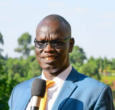
Speaking at the launch, Prof. Aggrey L. Abate, Chairperson of the South Sudan Nature Conservation Organization emphasized the urgency of addressing the growing impacts of climate shock, such as floods and droughts, that are forcing communities to move in search of safety and livelihoods.
He noted that understanding these drivers of mobility is critical for sustainable peace and resilience building.
“South Sudan stands at the frontline of climate and conflict-induced displacement. MECMEA provides a platform for evidence-based solutions and inclusive policy dialogue that will help us protect people and ecosystems,” said Aggrey.
Catherine Iliwa, the Country Project Coordinator, said that the lunch aims to kick-start different activities that will be undertaken in this initiative.
These include developing a functional key stakeholders database that will be broken down by the region of focus in South Sudan across Upper Nile, Central Equatoria, Warrap and Jonglei States.
“The project will also target youths, women and marginalised groups as well as the policymakers based on the research conducted.” She adds, Iliwa explains that the initiative will create awareness on climate-induced migration in order for the people to understand climate, migration and mobility better.
On his part, the Deputy Head of the European Union Delegation to South Sudan, Lothar Jaschke, reaffirmed the EU’s commitment to strengthening resilience, climate adaptation, and displacement response efforts across South Sudan and the greater Horn of Africa.
Jaschke said the EU remains a steadfast partner in promoting peace, sustainable livelihoods, and climate action.
Jaschke highlighted the increasing vulnerability of the region to climate-induced disasters, including floods, droughts, and cyclones, which have displaced thousands and worsened food insecurity.
“The Horn of Africa is rich in history and potential, but faces severe impacts of climate change,” he noted, adding that the EU’s approach focuses on “locally owned climate-resilient solutions” and empowering communities to adapt and recover.
However, Amb. Victoria Anib, Head of IGAD in South Sudan, appreciated the government for hosting the project, assuring the partners of IGAD’s continued efforts to combat climatic shocks, environmental degradation.
Anib assured that her office is committed to addressing the root causes of migration in Eastern Africa and the Horn of Africa. She underscored that the project aligns with IGAD’s objectives of sustainable peace and stability in the region.
Key Outcomes of the MECMEA Project Strengthened Evidence and Learning
The MECMEA project focuses on generating and sharing lessons from climate and mobility research to inform regional and national actions.
It also develops dashboards that highlight the vulnerabilities of displaced and at-risk communities, helping stakeholders better understand and respond to the challenges.
In addition, the project facilitates data-driven policy discussions among key actors to promote evidence-based decision-making.
Enhanced Multi-Level Capacity Building
Another important outcome of MECMEA is the empowerment of youth, women, and marginalized groups to take part in climate and mobility dialogues.
The project provides training and technical support for civil society, policymakers, and practitioners to strengthen their ability to address the impacts of environmental change and conflict.
It also documents and shares success stories from local communities that are leading the way in adaptation and resilience.
Improved Dialogue and Policy Coherence
MECMEA enhances collaboration by organizing policy events, public dialogues, and knowledge-sharing platforms.
It supports the development of actionable proposals for on-the-ground interventions that link climate, conflict, and mobility.
The project also creates online resources and toolkits to guide policymakers and practitioners in making informed, evidence-based decisions.
The Managing the impacts of environmental change and conflict on mobility in Eastern Africa through Evidence-Based Inclusive Policy Dialogue and Collaborative Actions (MECMEA) project is an 18-month regional initiative funded by the European Union (EU) and implemented through the International Centre for Migration Policy Development (ICMPD).
It aims to strengthen evidence-based and inclusive policy dialogue on the links between climate change, conflict, and human mobility across Eastern and the Horn of Africa.
MECMEA brings together research institutions, civil society, and government actors from across the region—including Ethiopia, Kenya, Somalia, South Sudan, and Burundi—to promote coordinated solutions that enhance resilience, reduce displacement risks, and turn environmental challenges into opportunities for cooperation and sustainable development.
The project is led by the Horn of Africa Regional Environment Centre and Network (HoA-REC&N) at Addis Ababa University, in partnership with consortium partners including MMC, Association Djibouti Nature (Djibouti), South Sudan Nature Conservation Organization (SSNCO), and PanAfricare (Kenya).
The launch event brought together representatives from government ministries, civil society, academia, and development partners who reaffirmed their commitment to collective action in addressing climate-induced displacement and building resilience for affected communities.

Currently on air
00:00:00 - 06:00:00
 1
1Published March 6, 2026
 2
2Published March 6, 2026
 3
3Published March 8, 2026
 4
4 5
5Published March 8, 2026

Published 7 hours ago

Published 7 hours ago

Published 10 hours ago

Published 10 hours ago

Published 10 hours ago
Support Eye Radio, the first independent radio broadcaster of news, information & entertainment in South Sudan.
Make a monthly or a one off contribution.
Copyright 2026. All rights reserved. Eye Radio is a product of Eye Media Limited.