
20th August 2026
You are here: Home | Featured | Humanitarian | News | Meet Mohamed Noor: The Sudanese national protecting children left behind by their deported mothers
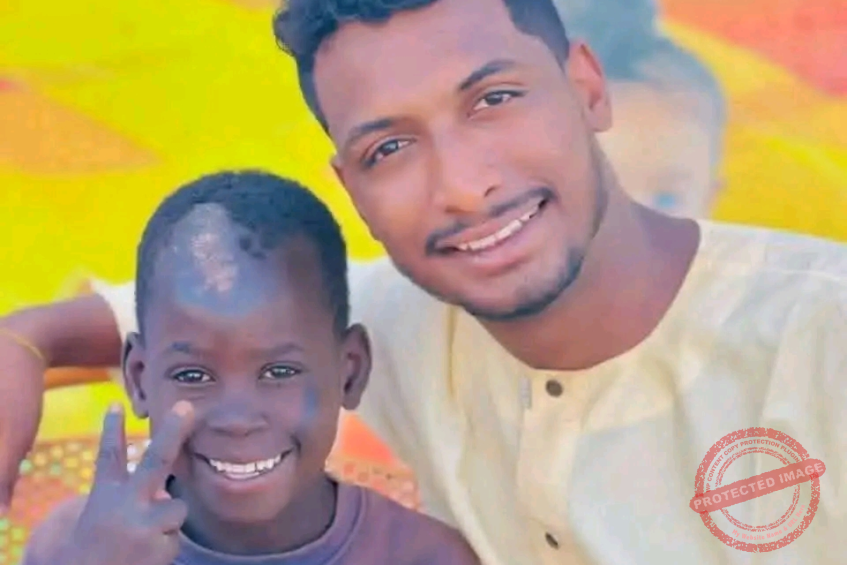
Mohamed Noor and young Hanin share a moment of connection in Omdurman. After finding the nine-year-old living on the streets following his mother's deportation, Noor provided the boy with a home, education, and a successful path back to his family. (Photo: Courtesy)
On a hot afternoon in Omdurman, the noise of traffic and roadside restaurants masked a quiet, growing crisis: a nine-year-old South Sudanese boy named Hanin was sleeping alone on the pavement, unnoticed by the crowds passing by. His life had been shattered—his father killed in a drone strike, and his mother forcibly deported to South Sudan, leaving him with no shelter and no protection.
Today, Hanin is safe, thanks to the intervention of Mohamed Noor, a young Sudanese national whose act of kindness has sparked a wider call to locate and protect South Sudanese children separated from their families during the 2025 crackdown.
The reunion began when Noor noticed Hanin surviving without care near a restaurant on April 25, 2025. Moved by the child’s plight, Noor approached him. “The boy responded simply that he was sleeping and staying there on the street,” Noor recalled.
Feeling a deep responsibility rooted in the shared bond between the people of Sudan and South Sudan, Noor took Hanin into his home. He provided the boy with food, clothing, a haircut, and a private room. To help find the child’s relatives, Noor recorded a video of Hanin and shared it online. The footage went viral across social media platforms in both countries.
As the video spread, relatives eventually recognized Hanin and contacted Noor. Before handing the boy over, Noor insisted on conditions to ensure the child’s continued welfare, including access to education. The family accepted, and Hanin was finally reunited with his relatives.
Hanin’s story is not an isolated incident. In October 2025, at least 111 South Sudanese mothers reported being forcibly deported to border areas. Many described being removed without warning, often leaving children behind in homes or on the streets.
Journalist Michael Christopher documented several of these harrowing cases in Joda. A South Sudanese deportee, Nyakuj Akol reported that police forced their way into her home, leaving behind her children, including a one-year-old and a nine-year-old.
Lucia Kor was another of the South Sudanese women who pleaded with authorities in Omdurman, explaining she had nine children with no one to care for them, but her cries were ignored.
Another South Sudanese who was deported, Rose Alier, stated that she was arrested while returning from a market in Khartoum Bahri and deported despite telling officers her children were home alone.
These accounts highlight a mounting humanitarian concern, with children left in dangerous conditions with limited access to food, shelter, or education.
For Mohamed Noor, Hanin’s case was a turning point. He is now calling on authorities in Khartoum to establish a dedicated facility for street children—a safe center to house those displaced by conflict, those left behind by deportations, and children with disabilities.
“I want to create a place for them,” Noor said. “I want to build a place where no child sleeps on the street. We can find their families, we can help them study, we can give them a future.”
While Hanin’s journey ended in a joyful reunion, thousands of other children remain in the shadows. Noor’s appeal serves as a reminder of the power of individual action and the urgent need for a structured response to protect the most vulnerable victims of displacement.

Currently on air
00:00:00 - 06:00:00
 1
1Published August 16, 2026
 2
2Published August 18, 2026
 3
3Published August 16, 2026
 4
4Published August 17, 2026
 5
5Published August 19, 2026
 6
6Published August 19, 2026
 7
7Published August 17, 2026
 8
8Published August 14, 2026
Published 3 hours ago

Published 9 hours ago

Published 11 hours ago

Published 11 hours ago

Published 11 hours ago
Support Eye Radio, the first independent radio broadcaster of news, information & entertainment in South Sudan.
Make a monthly or a one off contribution.
Copyright 2026. All rights reserved. Eye Radio is a product of Eye Media Limited.