
2nd September 2026
You are here: Home | Business & Economy | News | Regional News | KRA report cites 20M liters of rejected petrol sent to S. Sudan; Petroleum Ministry points finger at private traders
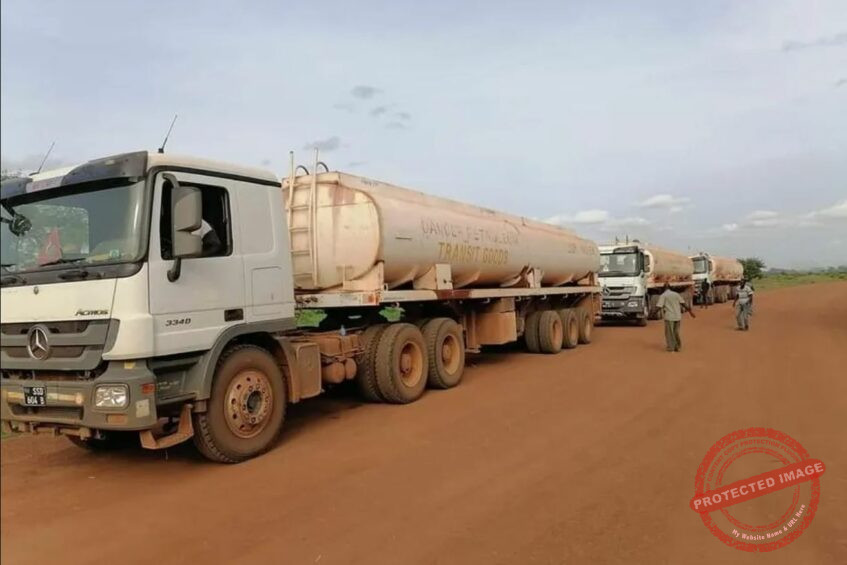
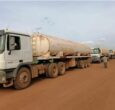
FILE PHOTO: Fuel tankers - courtesy
A new Kenya Revenue Authority (KRA) report reveals that Kenyan authorities re-consigned approximately 20 million liters of rejected, non-compliant petrol to buyers in South Sudan.
Responding to the disclosures in a recent interview with Eye Radio, Petroleum Undersecretary Santino Ayuel Longar neither confirmed nor denied receiving the shipment, but insisted that unregulated fuel retailers—rather than official government supply chains—are responsible for inferior petrol entering the local market.
According to the official document submitted to the Kenyan Senate Standing Committee on Energy, authorities redirected 48.12 million liters of substandard petrol from the disputed MT Paloma shipment to South Sudan and the Democratic Republic of Congo (DRC) after the fuel failed to meet Kenya’s environmental and quality standards.
In a recent interview with Eye Radio, Petroleum Undersecretary Santino Ayuel Longar neither confirmed nor denied the report, but insisted that unregulated fuel retailers—rather than official government supply chains—are responsible for inferior petrol entering the South Sudanese market.
He added that state authorities monitor imports closely and will hold private traders accountable if substandard fuel reaches local pumps.
“The quality of fuel will always be questioned if there is a problem. The challenge is that some unregulated companies procure lower-quality fuel from secondary retailers to maximize profits, and it becomes difficult to trace the origin,” Longar told Eye Radio.
“That is why countries establish government-to-government agreements and mandate specific companies to import fuel—so that if quality or quantity issues arise, those companies can be held directly responsible.”
The Kenyan disclosures have sparked intense public concern over border testing protocols and renewed accusations from civil society groups that regional neighbors are using South Sudan as a dumping ground for rejected products.
Automotive experts and public health advocates warn that off-spec fuel carries severe consequences for motorists and the public. High sulphur and excessive manganese levels in dirty fuel destroy spark plugs and engines, causing sudden power loss and costly mechanical repairs.
Furthermore, inhaling toxic chemical fumes from contaminated fuel increases the risk of respiratory illnesses, neurological damage, and long-term health complications.
While the KRA maintains that it tracked the consignment under the Regional Electronic Cargo Tracking System, local consumer advocate groups are calling on South Sudanese border agencies to enforce mandatory laboratory testing on all incoming fuel tankers before they discharge into local filling stations.
 1
1Published August 29, 2026
 2
2Published September 1, 2026
 3
3Published August 30, 2026
 4
4Published August 28, 2026
 5
5Published August 31, 2026
 6
6Published August 31, 2026
 7
7Published September 1, 2026
 8
8Published August 31, 2026



Published 4 hours ago
Published 5 hours ago

Published 7 hours ago
Support Eye Radio, the first independent radio broadcaster of news, information & entertainment in South Sudan.
Make a monthly or a one off contribution.
Copyright 2026. All rights reserved. Eye Radio is a product of Eye Media Limited.