
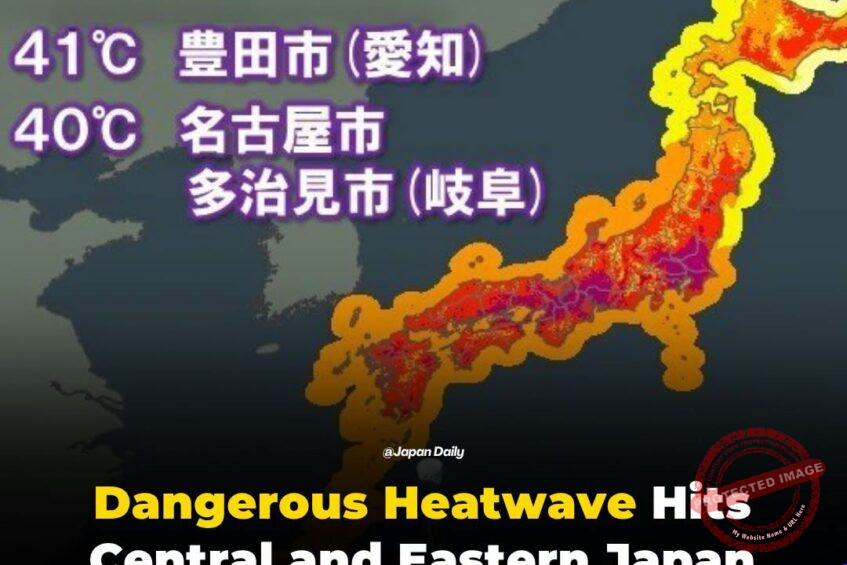
A severe heat wave sweeping across Japan has left seven people dead and sent thousands more to hospitals, according to government data released this week.
According Kyodo News, the Fire and Disaster Management Agency said 4,580 people were taken to hospitals by ambulance for heat-related illnesses between July 6 and July 12. The figure marks a sharp increase of 3,210 cases compared to the previous week.
Older adults were the most affected, with 2,827 patients aged 65 and above, representing nearly 62 percent of all reported cases.
The seven deaths were reported across five prefectures, including Nagano, Shimane and Nagasaki.
Japan’s Meteorological Agency said the extreme summer heat persisted across much of the country. On July 10, temperatures climbed above 30 degrees Celsius at 585 of the nation’s 914 weather observation stations.
The heat intensified further on July 21, affecting wide areas from Kyushu to the Tohoku region. Forecasters warned of dangerously high temperatures well above seasonal averages, particularly in inland parts of the Tokai and Kanto regions.
Japan experienced its first extreme heat day of the year, with temperatures expected to exceed 40°C. Toyota City in Aichi Prefecture was forecast to reach 41°C, while Nagoya City and Tajimi City were expected to hit 40°C. Central Tokyo was projected to record a high of 36°C.
In response, authorities issued Heat Alert warnings for 42 prefectures, the highest number recorded so far this year.
Health officials warned that early signs of heatstroke include dizziness, muscle cramps and extreme fatigue, which can quickly develop into severe headaches, confusion and other life-threatening conditions if left untreated.
Authorities continue to urge residents, especially older people, to stay hydrated, avoid unnecessary outdoor activities during the hottest hours of the day and keep air conditioning running throughout the day and night to reduce the risk of heat-related illness.