
12th March 2026
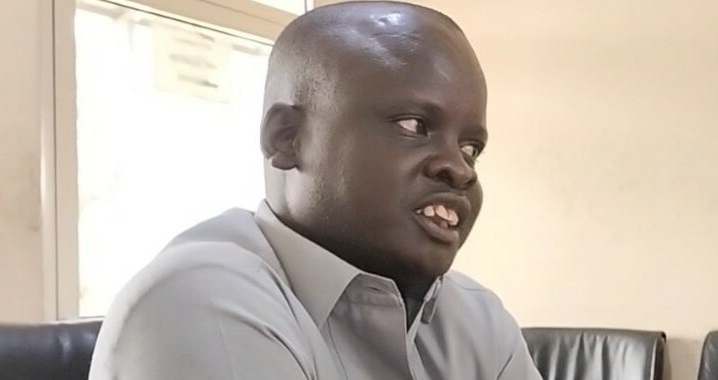
SPLM-IO lawmaker Juol Nhomngek Daniel. [Photo by The Radio Community]
A representative of Cuibet Community at the Bahr El Ghazal inter-communal peace consultation said subnational conflicts have caused insecurities and displaced people from their farms, leaving families begging in government offices and relying on relief food.
Speaking at the dialogue on Friday, Juol Nhomngek, who is also a member of the national parliament, said a habbit of begging in government offices is prompting politicians to steal public funds to sustain their extended families and communities.
The lawmaker said, in the past, communities were self-reliant and didn’t rely on government assistance because they were able to fend for themselves in the bush.
He furthers said communities had access to natural resources such as fruits, animals, and leaves, which they used to sustain themselves.
“Communities could cultivate before. they could not depend on their members in the government,” he said at the inter-communal dialogue.
However, he states that many families are now left dependent on relatives and clansmen in government after being forced to major cities by the inter-communal conflicts.
Nhomgek stated that the situation is a significant problem because it erodes trust and creates corruption.
“But because of these conflicts, now people are forced to beg and because of that, they have increased dependency on those in the government.”
“And those in the governments are force to steal from the government to sustain the larger families at home, and this is the source of our problem.”
He added that in the past, young people would graze their cows in the far plains, but he added that nowadays, cattle are kept near settlements, leading to conflicts between cattle keepers and farmers.
According to him, the problem is not that people don’t produce food, but that they cannot produce due to the insecurity that prevails their areas.
He said it is the government’s responsibility to address this issue and ensure the well-being of its citizens.”
“We have youth who used to go and keep their cows outside the town, but now, they keep their cows near villages and crops are destroyed, and then there is no food not because they can cultivate, but because cattle keepers disturbed the farmers.”
“So the conflicts have uprooted everything. Nobody is even surviving whether you are a farmer or a cattle keeper. You are all the same, and this has left people scrambling over scarce resources.”
The Committee tasked with resolving conflicts and restoring peace among communities in the Greater Bahr el Ghazal region has embarked on a wider consultative meeting to initiate grassroots understanding in the region.
The committee was established in a Decree by President Kiir in May 2024 after inter-communal violence, fueled by land disputes, rocked the region.
The body headed by Dr. Gai Kok is mandated to meet with all the communities affected by inter-communal violence, identify the root causes, and steps to forge peace and stability in the region.
Its activities include initiating dialogue among the communities and ensuring that their grievances are settled through peaceful grass-roots approaches.
The committee was also directed to complete its work and report back to the president within 90 working days.
Greater Bahr el Ghazal region has been marred in deadly inter-communal violence involving communities of Twic of Warrap State and Abyei Administrative Area, and those of Jur River in Western Bahr el Ghazal State and Gogrial East County, Warrap State.

Currently on air
09:00:00 - 12:55:00
 1
1Published March 6, 2026
 2
2Published March 6, 2026
 3
3Published March 8, 2026
 4
4Published March 8, 2026
 5
5Published March 10, 2026

Published 2 hours ago

Published 2 hours ago

Published 2 hours ago

Published 2 hours ago

Published 3 hours ago

Published 5 hours ago
Support Eye Radio, the first independent radio broadcaster of news, information & entertainment in South Sudan.
Make a monthly or a one off contribution.
Copyright 2026. All rights reserved. Eye Radio is a product of Eye Media Limited.