


Finance Minister signs regulation to ensure procurement transparency
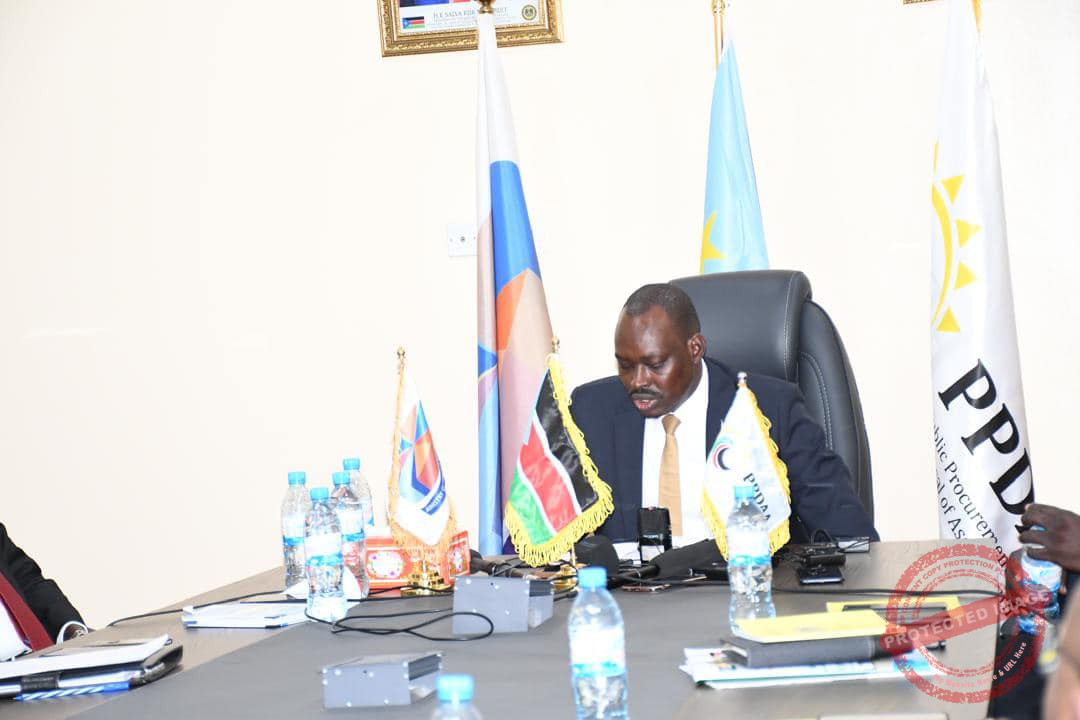
The Minister of Finance Dr. Marial Dongrin has signed Public Procurement and Disposal of Assets Authority Regulation 2024 into law to boost transparency, prevent asset misuse, and enhance economic reform efforts in the country.
Financial experts believe corruption in South Sudan takes shape in spending, which involves a procurement system that is susceptible to fraud and waste, with lucrative contracts regularly awarded to the suppliers connected to government officials.
The document aims to manage the public procurement process by creating an efficient and transparent procurement system in line with public finance management reforms.
The regulation stipulates that there shall be a committee of five members responsible for both procurement and disposal of public assets in the country.
Speaking during the signing ceremony in Juba on Thursday, Finance Minister, Marial Dongrin Ater, said the document is part of the government’s effort to enhance transparency and accountability.
He added that the regulations are designed to prevent arbitrary decisions of government assets and ensure all actions are conducted in accordance with the law.
“If we have a body that has a technical capacity, we are able to even fast track the processes because they know what the processes are. These people will have the contacts of suppliers or specialized procurements, they know the market prices,” he said.
“When you put together the government procurements, you have a better ground to negotiate for less costly contracts and that is all we want, it is not about anything else and this is how other governments are operating.”
“So let us take it very seriously, we should not create push and pull between the agencies and the authority.”
The Public Procurement and Disposal of Assets Regulations 2024 was passed by the national parliament in August 2024 to ensure procurement or disposal of government assets is conducted in a transparent and regulated manner.
Themba Bhebh, the Country Manager of the African Development Bank, said the operationalization of key financial reforms laws has been a major challenge for South Sudan.
Thema said one of the key issues is the operationalization of South Sudan National Revenue Authority Act.
“Do we have very clear institutional structure for execution? Yes, they are there, but are we very clear when the user comes and say I want to have this so have we set up very clear structures for implementation.”
“I think for all the lessons that have learned, these very important things that have emerged. We can come up with a very brilliant regulations, world class but for as long as they are not applicable as ordinary South Sudanese see them applicable to them, their World class status is not relevant to them.”
Acting Country Manager of World Bank, Juvenal Nzambimana, said the implementation of the inked regulation is key for the improvement of Public Finance Management, transparency and accountability.
“The implementation of this regulation is crucial for the improvement of Public Finance Management, governance management, transparency and accountability.”
“Late Koffi Annan, Secretary General once said that if corruption is a disease, transparency and accountability is part of the remedy. I think this is part of what the government of South Sudan is bringing by putting in place a function of public procurement system.”
South Sudan is one of the most corrupt countries in the world, according to Transparency International’s 2023 index, which ranked South Sudan as the second most corrupt ahead of Syria and Venezuela as Somalia topped the list.
The country was ranked 177th out of 180 countries after scoring 13, out of a scale of 100, while Somalia scored 11 and plunges to the bottom of the list for the second year in a row.
The Corruption Perceptions Index – which is the most widely used global corruption ranking in the world – measures how corrupt each country’s public sector is perceived to be, according to experts.