
17th August 2026
You are here: Home | Central Equatoria State | Eastern Equatoria State | Western Equatoria State | Equatoria traditional leaders renew call for federalism, credible elections
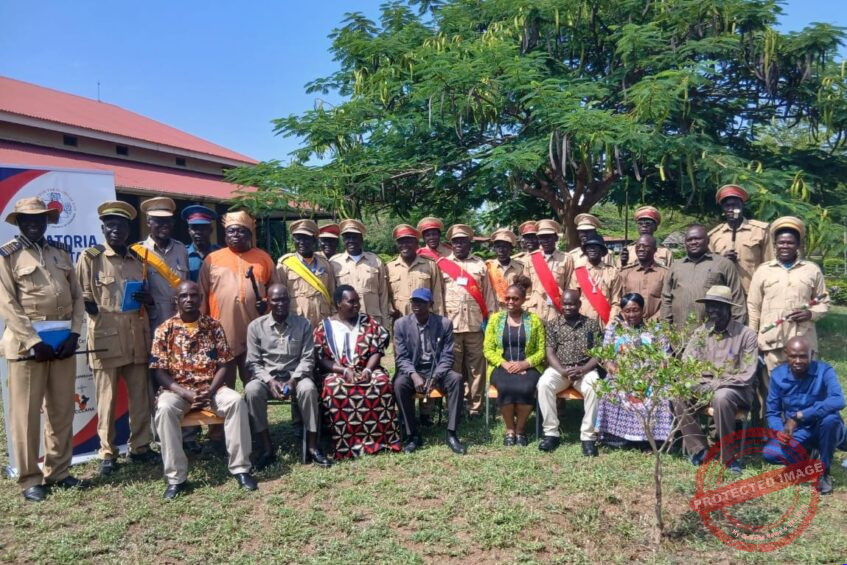
Photo Credits|Courtesy
Religious and traditional leaders from the Equatoria region have called for the adoption of federalism, comprehensive security sector reforms and credible national elections as key steps toward lasting peace and stability in South Sudan.
The call was made in a communiqué issued at the end of the Equatoria Inter-State Non-Partisan People-to-People Peace Conference held from June 23 to 26 at the Good Shepherd Peace Centre in Kit, under the South Sudan Council of Churches and peace partners.
The leaders said federalism would strengthen the rule of law, improve governance, enhance resource sharing and support balanced development across the country.
They also urged reforms in the security sector based on merit and professionalism, including fair representation within the armed forces and the disarmament of all armed civilian groups without exception.
On land issues, the conference maintained that land belongs to indigenous communities under ancestral ownership. It called for the return of illegally acquired land and urged authorities to regulate land administration in line with the 1956 boundaries.
The communiqué further called for stronger protection of children through laws criminalizing child abduction and child marriage, and for measures to curb cattle movements linked to conflict and displacement.
Participants also urged political and community leaders to avoid hate speech and divisive conduct, while encouraging unity, agricultural production, innovation and peaceful coexistence.
On the political transition, the conference called for the acceleration of the permanent constitution-making process through inclusive public participation and transparency. It also urged the conduct of free, fair and credible elections, warning that interference in the electoral process could undermine trust and stability.
The gathering supported an inclusive national dialogue involving political parties, traditional leaders, faith-based institutions and civil society.
It also welcomed the African Union C5 initiative to engage all parties, including holdout groups, in peace talks in Tanzania, and called for the integration of the conference outcomes into ongoing peace processes.
Rt. Rev. Jackson Aripa George Gabriel, Assistant Bishop of the Episcopal Diocese of Juba and Chairperson of the Equatoria Regional Inter-Church Committee, read the communiqué, saying:
“We, the religious and traditional leaders of the Equatoria Region, call for federalism, comprehensive security sector reforms, protection of indigenous land rights, an end to child abduction and child marriage, regulation of cattle movement, a people-driven constitution, and the conduct of free, fair, transparent and credible elections.
We are convinced that inclusive dialogue, good governance and respect for the rule of law are essential for lasting peace, unity and development in South Sudan,” he said
Ongoing Debate on Federalism
The call by religious and traditional leaders in Equatoria for the adoption of federalism adds to a long-running national debate over the structure of governance in South Sudan, where competing views on decentralization and power sharing continue to shape political discourse and constitution-making processes.
Public discussions captured in previous Eye Radio reports show that federalism has consistently emerged in national dialogues, policy workshops, and civic consultations as one of the governance models under consideration for strengthening accountability, service delivery, and resource distribution. However, these discussions have largely reflected stakeholder positions expressed in forums rather than a quantified national consensus based on formal surveys.
In various engagements linked to constitutional development and governance reforms, civil society actors, political leaders, and church representatives have frequently raised federalism as a possible framework for addressing long-standing concerns over representation, equity, and access to services across regions.
Supporters of the model argue that it could bring decision-making closer to communities and improve responsiveness of public institutions.

Currently on air
00:00:00 - 06:00:00
 1
1Published August 10, 2026
 2
2Published August 10, 2026
 3
3Published 17 hours ago
 4
4Published 15 hours ago
 5
5Published August 11, 2026
 6
6Published August 12, 2026
 7
7Published August 10, 2026
 8
8Published August 10, 2026
Published 15 hours ago
Published 17 hours ago

Published 18 hours ago

Published August 15, 2026
Published August 15, 2026

Published August 15, 2026
Support Eye Radio, the first independent radio broadcaster of news, information & entertainment in South Sudan.
Make a monthly or a one off contribution.
Copyright 2026. All rights reserved. Eye Radio is a product of Eye Media Limited.