

Bright Stars: How our national team is bringing back the joy and hope of independence
The story of the Bright Stars, our national basketball team, is, in many ways, the true story of South Sudan. It is a story of who we are, what we can achieve, and how we want the world to see us.
For too long, the international story about South Sudan has been dominated by conflict, hunger, poverty, corruption, and political and humanitarian crises. The Bright Stars are changing that narrative. They are showing the world another South Sudan — a country of talented, determined, and proud people who can compete on the global stage.
That is why the Bright Stars matter far beyond basketball.
Their success gives South Sudan a positive headline. It is a story that does not begin with war or crisis. It begins with talent, hard work, discipline, and national pride. It gives us something to celebrate together.
The Bright Stars’ competitiveness on the global stage is a story worth celebrating because it reflects the South Sudan we know and the South Sudan we want to build.
Their success has also rekindled something many of us felt on 9 July 2011, the day South Sudan became independent: the joy, the pride, the celebration, and the belief that a new country could become a better place for its people.
Watching the Bright Stars compete and succeed reminds us of what is possible when our people are given peace, proper facilities, good leadership, and an environment where talent can grow.
Imagine what South Sudan could achieve if our young people had the same opportunities in education, sports, science, technology, music, business, and the arts.
The Bright Stars have shown us what happens when talent is nurtured.
Their story also takes me back to the early days of 2003, when I covered the peace talks in Naivasha, Kenya, with colleagues such as Emmanuel, David, and Benjamin. We were young journalists working with what was then Sudan Radio Services, and we felt a strong sense of duty.
Whenever we had the opportunity to travel to Naivasha, we did so with excitement and gratitude. We knew we were witnessing an important moment in our country’s history.
Leaders such as the late Samson Kwaje, as well as liberation figures including Deng Alor and Pagan Amum, welcomed us warmly. Even the Commander-in-Chief himself made us feel that the work we were doing mattered.
We were young, but we carried the hope of a people who wanted peace and freedom.
That same spirit is visible today in the Bright Stars.
It is also visible in other South Sudanese success stories. The recent recognition of Boma-Badingilo by UNESCO is another reminder that our country has achievements worth celebrating, even amid the many challenges we face.
These stories matter because they give our people something else to talk about. They remind us that South Sudan is not only a story of crisis.
I see that hope in the eyes of young South Sudanese everywhere. I see it in young musicians, comedians, athletes, students taking part in debates, and young people pursuing their dreams despite difficult circumstances. I see it during national celebrations, when our people proudly raise the South Sudanese flag.
This is the South Sudan we should tell the world about.
The Bright Stars are not perfect, and basketball alone cannot solve our country’s problems. But their journey has given us something that is sometimes harder to find: hope.
They have reminded us that our circumstances do not have to define our destiny.
There is also something deeply symbolic about the way the world sees our basketball players. South Sudanese are often described as tall, strong, and resilient. The biblical description in Isaiah 18 of a people who are tall and smooth-skinned has often been associated with the people of the Upper Nile region and, by many South Sudanese, with our own identity.
Whether one reads that passage as history, symbolism, or faith, the image of a tall and resilient people speaks powerfully to who we are today.
We have survived war, displacement, loss, and enormous hardship. Yet we continue to create, compete, dream, and hope.
That is the real Bright Stars story.
It is not simply about winning basketball games. It is about a people rediscovering confidence in themselves.
It is about seeing South Sudanese excellence on the world stage and saying: we can do this too.
The Bright Stars have brought back a little of the feeling we had on 9 July 2011. They have reminded us of the joy and optimism of that moment when we believed that a peaceful and prosperous South Sudan was within our reach.
The challenge now is to turn that hope into reality.
If our young people can take South Sudan to the global basketball stage, then surely our country can also build the schools, hospitals, roads, sports facilities, businesses, institutions, and peaceful communities that our people deserve.
The Bright Stars have shown us the potential.
Now, South Sudan must create the environment for that potential to shine.
About the Author
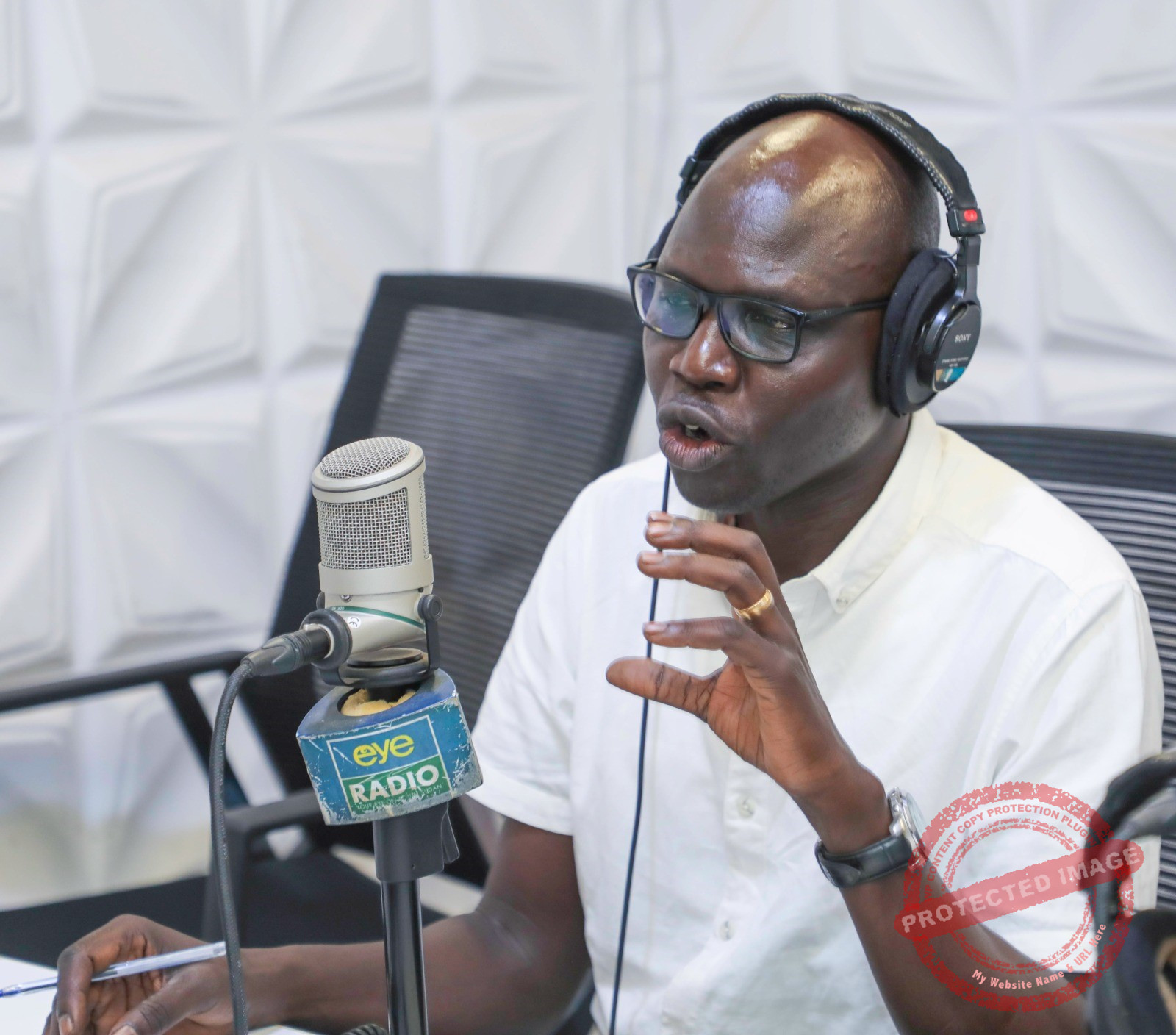
Stephen Omiri Obur is a prominent South Sudanese media executive and the Chief Executive Officer of Eye Media and Eye Radio. He is also a Certified Public Accountant and a PhD candidate in Strategic Management at the University of Nairobi.
He writes on media, leadership, governance, and the social and economic development of South Sudan.
He can be reached at Stephen.Omiri@eyeradio.org.