
At least three cattle keepers have been arrested in Amadi State for violating an order not to enter into grazing lands with their animals. Continue reading “Three cattle keepers arrested in Amadi for violating Kiir’s orders”
Month: April 2019
Jubek to reclaim illegally acquired playgrounds

The government of Jubek State has threatened to take back playgrounds that it says have been grabbed in Juba. Continue reading “Jubek to reclaim illegally acquired playgrounds”
Tonj & Wau States join hands to address Kwajina conflicts

The Ministers of Local Governments in Tonj and Wau have been ordered to address recurrent incidents of violence between cattle keepers and farmers along the boundaries of the two states. Continue reading “Tonj & Wau States join hands to address Kwajina conflicts”
Police caution parents of teenagers becoming gangsters
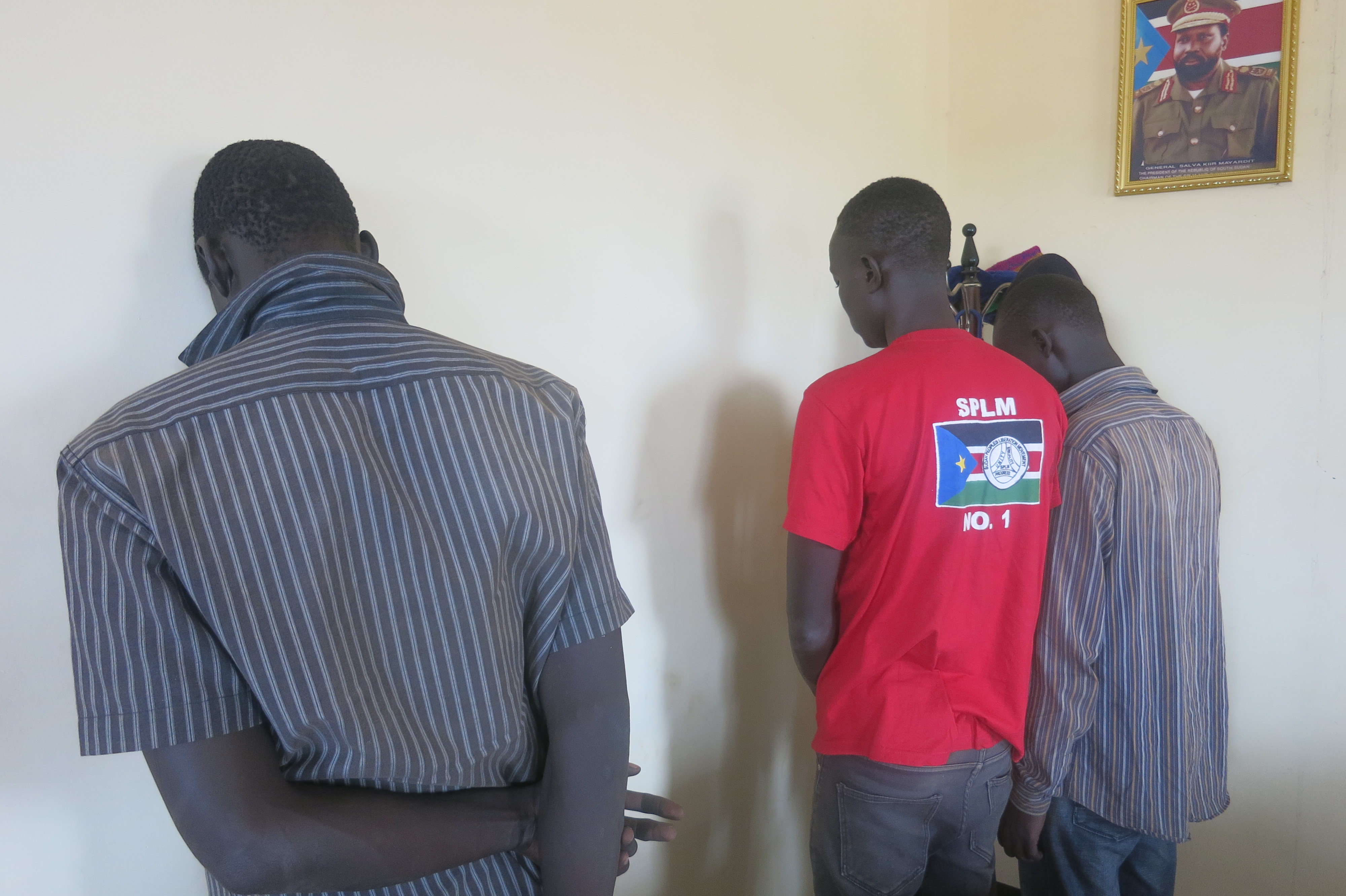
The Inspector-General of Police is urging parents of teenagers in Juba to ensure that they do not join the juvenile gangs.
“We cautioning our citizens, cautioning our parents, cautioning our population as a country and as police,” said General Majak Akech.
The call comes after the detention of over 30 youngsters who are locally described as “niggers”, a contemptuous term for a black or dark-skinned persons.
The police arrested the minors on Good Friday in Juba near Juba teaching Hospital.
They say the children– of whom eight are girls were involved in a street fight between two groups.
“Good enough the parents are beginning to come now to try to dialogue with the police to take their children so that they take care of them.”
Previous clashes among various groups led to death and serious injuries as they use crude weapons such as knives, machetes and sometimes pistols.
“That is why we are very concerned of giving this message to our population,” Mr Majak said.
Health reports not meant to tarnish govt’s image -MSF

Medicine San Frontiers says its health reports are not meant to taint the image of the government but to help it address problems facing citizens. Continue reading “Health reports not meant to tarnish govt’s image -MSF”
Controversy over interim govt schedule requires IGAD’s intervention
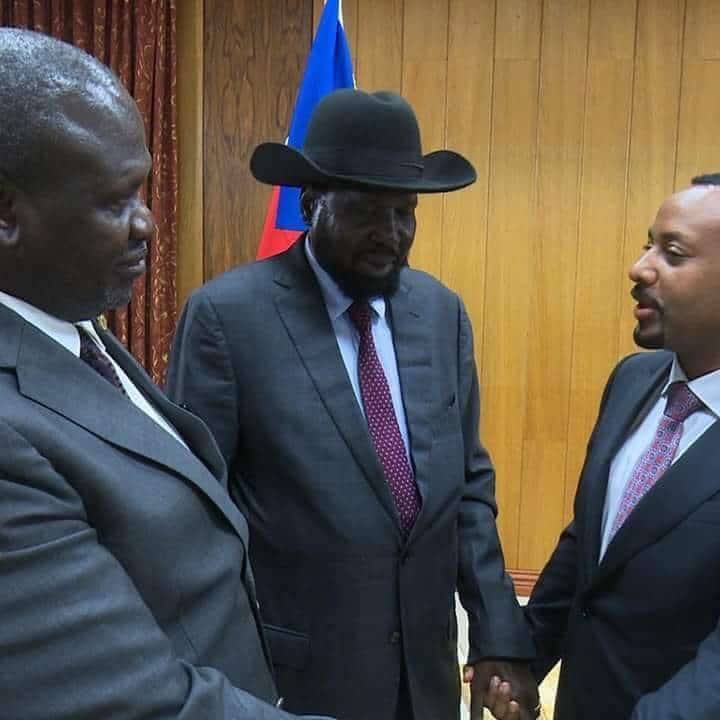
A political analyst says the regional mediation body that brokered the new peace accord should intervene in the controversy over the formation of the interim government.
In accordance with the new peace accord, the peace parties shall form the reconstituted transitional government of national government on the 12th of May – 18 days from now.
On Tuesday, the main Opposition Leader, Dr. Riek Machar rejected a second request by President Salva Kiir to return to Juba to form the new transitional government.
Dr. Machar based his stance on the fact that some important security arrangements have not been put in a place – including unification, training and cantonment of armies.
However, President Kiir argued that all these would be implemented with time.
“Its postponement cannot be decided by Dr. Riek alone [because] there are parties also who negotiated that agreement,’ said political analyst Dr. James Okuk.
Besides he said; “there are other neighboring and regional leaders who guaranteed that agreement, and there are international partners who supported that agreement.”
This, according to him, implies that the deadlock can be broken with intervention from IGAD and all the signatories and guarantors of the R-ARCISS.
“Because as far as you can see there is really nothing much that has moved. So they have to find a new arrangement on how to move forward.
He then suggests the parties seat down and reach a consensus on what to do next.
Bangladesh Chief of Staff wishes to see peace in S.Sudan

The visiting Chief of Staff of Bangladesh says he is hopeful that the new peace deal will hold.
General Aziz Ahmed left Dhaka on Monday night to visit the United Nations’ Peacekeeping Mission areas in Congo and South Sudan.
During his eight-day visit, General Ahmed is inspecting Bangladeshi army contingents deployed as part of the UN Peacekeeping forces.
He visited Wau on Tuesday where Bangladeshi peacekeepers are stationed.
“I will always pray and I will wish that peace comes here, normalcy comes here as soon as possible,” said Gen. Aziz during an interview with Eye Radio.
Aziz Ahmed served in United Nations particularly in Wau as Bangladesh force commander in 2005 – 2006.
He said if peace reigns in South Sudan, the people will be able to grow their own food, and the country will develop too.
‘If peace prevails in this area, you will flourish, you will develop your country like anything and that is what we want to see in the coming days.”
“Because the people of this area as my pass experience says, are very honest, very hardworking and your soil is very fertile,” Gen Aziz emphasized.
Patients at Tombura’s only health facility share beds

The Commissioner of Yangiri County in Tombura State says patients are sharing beds due to lack of admission space at the only health facility there.
Located approximately 78 kilometers east of the state capital, Yangiri County was up graded from Payam to County in July last year.
According to the county commissioner, Letitia Benito, the hospital has one ward.
“In one room, you find a lot of people who are sick with different diseases but sharing more or less the same bed…which is not right,” said Laetitia Benito.
As a result, she says patients – including children, expectant mothers and men are forced to share beds.
“There is no ward whereby you can accommodate only children or infant or women who are in labor.”
Speaking to Eye Radio in Tombura town, Miss Benito said she is engaging development partners to help.
“You know, with partners, they say they are lobbying and they have to ask others who can help them.”
“We are trying to talk to them but yet there is no much change yet.”
Captive Major Gen. Stephen Buay pleads not guilty

The military leader who is being tried by a military court in Juba for treason and other charges has pleaded not guilty. Continue reading “Captive Major Gen. Stephen Buay pleads not guilty”
Irregular salaries reason soldiers set up road blocks

The spokesperson of the national parliament says armed forces should be paid salaries in time in an attempt to reduce the number of Continue reading “Irregular salaries reason soldiers set up road blocks”