
5th March 2026
You are here: Home | Humanitarian | News | UNICEF Ethiopia: Half of 130,000 refugees from Nasir, Ulang are children
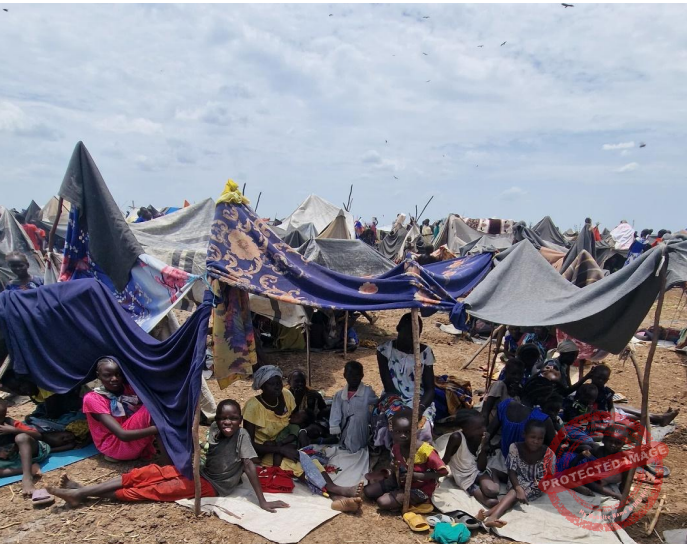
South Sudanese refugees in their temporary shelters at Buribiey entry point in Ethiopia - Courtesy of UNICEF Ethiopia
GAMBELLA, Ethiopia (Eye Radio) – Half of the 130,000 people who’ve fled South Sudan’s Nasir and Ulang for Ethiopia since March 2025 are children, UNICEF Ethiopia reports.
A report by UNICEF Ethiopia titled “Ethiopia Refugee Response: Impact of South Sudan Crisis” states that escalating conflict and violence in South Sudan’s Upper Nile state have forced at least 35,000 South Sudanese to flee to Gambella, Ethiopia, since March 5, 2025.
According to the report, this latest influx significantly intensifies an already massive humanitarian crisis in the region.
It says the ongoing clashes between the South Sudan People’s Defence Forces (SSPDF) and SPLA-in Opposition and White Army in Nasir and Ulang counties have internally displaced over 130,000 people – predominantly women and children – in South Sudan, in addition to those crossing borders.
It stated that as of March 31, 2025, Gambella was already home to 395,212 South Sudanese refugees (60% children) across seven overcrowded camps. With fighting continuing near the border, the number of new arrivals is expected to rise, further straining local resources.
Dire conditions and compounding crisis
The report stated that most new arrivals are currently sheltering in Burbiey kebele in Wanthoa woreda, near the South Sudan border, often having crossed the Baro river to reach safety. It added that conditions facing these asylum seekers are dire, with no basic services available.
The UNICEF Ethiopia reported that a multi-sectoral needs assessment on April 16, 2025, confirmed that food, shelter, essential relief items, and clean drinking water are their most urgent needs.
The approaching rainy season (July-September) brings a high risk of flooding, threatening to significantly worsen the situation in these vulnerable border locations. This is compounded by an ongoing cholera outbreak in Gambella, which began on February 11, 2025.
As of May 4, 2025, 229 of the reported 2,115 cholera cases were among asylum seekers, highlighting the acute health risks. South Sudan is also facing a significant cholera outbreak, increasing concerns about cross-border transmission.
Protection concerns and urgent relocation are needed
The extreme violence in South Sudan, including aerial bombardments in civilian areas, has led to severe protection concerns among the displaced. A preliminary rapid assessment by UNICEF and partners identified over 170 children as separated and more than 50 as unaccompanied.
Many children exhibit psychosocial distress and trauma, and there have been several allegations of sexual violence. Worryingly, there are currently no safe spaces or social workers deployed to identify and support child victims.
The report says given the ongoing risks and fighting close to the border, the Ethiopian Government has reportedly identified two sites for this purpose.
The report stated that the immediate relocation of new arrivals to dedicated reception sites away from the border, where basic services can be provided, is a critical priority.
UNICEF and Partners respond
According to the report, UNICEF, in collaboration with its implementing partners, is actively supporting flood emergency preparedness and response plans in Gambella.
The report says these efforts aim to address the critical needs of both host communities and South Sudanese refugees across vital sectors, including Health, Nutrition, WASH (Water, Sanitation, and Hygiene), Education, and Child Protection programs.
It concluded that continued support is essential to address this escalating humanitarian crisis and ensure the protection and well-being of those displaced by conflict.
Currently on air
07:00:00 - 07:10:00
 1
1Published March 3, 2026
 2
2Published February 28, 2026
 3
3Published March 1, 2026
 4
4Published March 2, 2026
 5
5Published February 27, 2026
Published 11 hours ago

Published 13 hours ago

Published 13 hours ago

Published 13 hours ago

Published 14 hours ago

Published 15 hours ago
Support Eye Radio, the first independent radio broadcaster of news, information & entertainment in South Sudan.
Make a monthly or a one off contribution.
Copyright 2026. All rights reserved. Eye Radio is a product of Eye Media Limited.