
10th March 2026
You are here: Home | Business & Economy | Opinion | Fuel price surge: A wake-up call for government to protect citizens
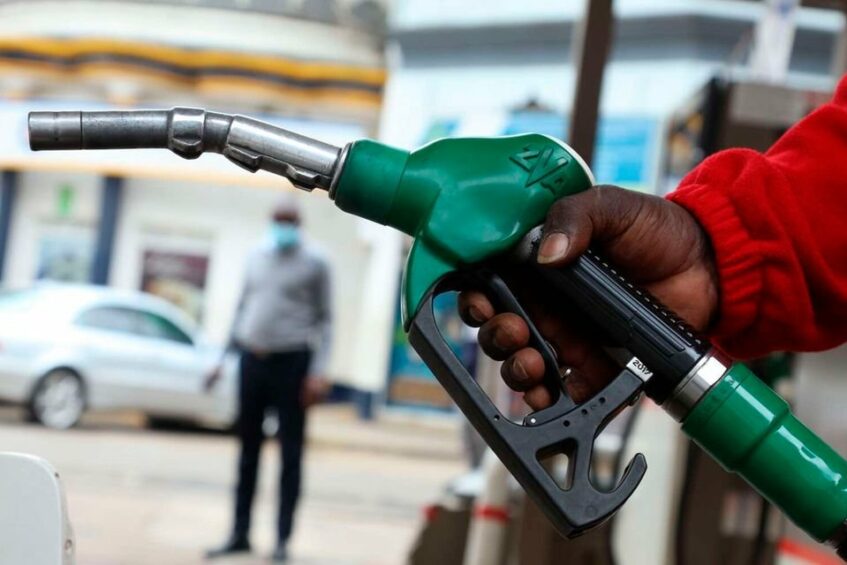
A Fuel attendant holding a fuel pump at the filling station along Kimathi Street in Kenya. (Photo: NMG).
Over the past week, fuel prices across the country—both in Juba and in various states—have increased to levels that far exceed the purchasing power of ordinary citizens.
As of March 6, 2026, the price of a litre of gasoline at petroleum stations in Juba had reached 12,000 SSP, which is approximately 2.6 USD at the official exchange rate of 4,544 SSP to 1 USD.
In the parallel market, commonly referred to as the black market, the dollar is trading at about 5,800 SSP, making the cost of that same litre roughly 2.1 USD, which remains well out of reach for many ordinary South Sudanese.
This situation is even more difficult outside the capital. In Malakal, for example, a litre of petrol is now selling for as high as 30,000 SSP—about 6.6 to 7 USD per litre. Such prices are hardly practical and clearly represent exploitation of South Sudanese consumers, driven by the lack of effective institutional oversight during these challenging times.
Please note that a surge in fuel prices has a ripple effect. It will cause the cost of goods and services to rise sharply across the country.
The time is now to see institutions such as the Central Bank, the Ministry of Trade, and consumer protection agencies step in swiftly to address this crisis.
With ongoing conflicts between the US, Israel, and Iran, where there is no ceasefire reached so far, the government must adopt immediate policies to ease the burden on the struggling population.
I have one specific recommendation, which is a short-term step, to review and revise fiscal policies—particularly to reduce or eliminate taxes on fuel.
Furthermore, some of the taxes levied by states, counties, such Juba City Council, and others should be reassessed and suspended promptly to prevent further hardship for ordinary citizens.
Now is the time for decisive action to protect the vulnerable and ensure stability in these turbulent times.
Note: The opinions expressed herein are solely those of the author and do not necessarily reflect the views of the media station. The author, Mr. Omiri Stephen, is the head of Eye Media, a certified public accountant, a macroeconomic analyst, and a commentator. He holds a master’s degree in Business Administration and is currently pursuing a PhD in Strategic Management at the University of Nairobi.

Currently on air
00:00:00 - 06:00:00
 1
1Published March 3, 2026
 2
2Published March 6, 2026
 3
3Published March 6, 2026
 4
4Published March 8, 2026
 5
5
Published 11 hours ago
Published 11 hours ago
Published 11 hours ago

Published 11 hours ago

Published 11 hours ago

Published 12 hours ago
Support Eye Radio, the first independent radio broadcaster of news, information & entertainment in South Sudan.
Make a monthly or a one off contribution.
Copyright 2026. All rights reserved. Eye Radio is a product of Eye Media Limited.