9th June 2026

Green-Niche launches grassroots climate resilience initiative in South Sudan

The Green-Niche Conservational Institute, in collaboration with recent graduates from the Faculty of Agricultural Sciences at the Catholic University of South Sudan, has officially launched the Climate Resilience Initiative for South Sudan (CRISS), a grassroots program aimed at combating climate change and promoting environmental sustainability across the country.

The launch event, held in Juba on Saturday afternoon, drew key stakeholders, including community leaders and government officials, with the Director General for Climate Change at the National Ministry of Environment and Forestry, Lutana Musa Lasu, in attendance.

Dut Deng Achuil, Executive Director of Green-Niche, said the initiative was timely and necessary, emphasizing the urgent need to implement climate-resilient strategies and promote sustainable practices that benefit both people and nature.

“People and nature are inherently connected; they are not separate entities,” Achuil said during his keynote speech at the event.

“Our existence depends on nature, and without people to care for and nurture the environment, both would falter. Now is the time to implement climate-resilient initiatives and promote sustainable practices.”

He further underscored the importance of collaboration, calling on other organizations and stakeholders to join hands in addressing the climate crisis.

“Progress cannot be achieved alone,” he added. “Together, we can create a sustainable and resilient future.”

The Climate Resilience Initiative for South Sudan aims to empower local communities by equipping them with the knowledge and tools needed to adapt to climate impacts.

The program includes components such as climate-smart agriculture, waste management, environmental education, biodiversity conservation, tree planting, and capacity building.

Speaking at the same event, Lutana Musa Lasu praised the initiative and echoed the call for collective action in tackling climate change, citing warnings from the Intergovernmental Panel on Climate Change (IPCC).

“At the Ministry of Environment and Forestry, we commend initiatives like this that aim to combat climate change,” Lasu said.

“If we do not intensify efforts to reduce greenhouse gas emissions, the Earth’s temperature could rise by more than two degrees Celsius. Such a rise would have severe consequences for life on our planet.”

Lasu urged all stakeholders to work together to meet nationally determined targets and protect the environment for future generations.

South Sudan has experienced increasing vulnerability to climate change, with shifting rainfall patterns and rising flood risks.

In recent years, frequent and intense floods have displaced tens of thousands of families, particularly in the Upper Nile region.

Despite these challenges, stakeholders at Green-Niche expressed optimism that locally driven initiatives like CRISS could significantly contribute to climate adaptation and mitigation efforts in the country.

Green-Niche, one of South Sudan’s leading conservation and scientific institutes, has long been committed to environmental protection. Its core pillars include climate adaptation, sustainable agriculture, livelihood development, environmental education, advocacy, and community empowerment.

“We believe in a holistic approach,” said Achuil. “By working directly with communities, we are planting the seeds of change in our mission to protect the environment and empower people.”

Continue reading “Green-Niche launches grassroots climate resilience initiative in South Sudan”

Special court sessions interfere with assembly calendar, says deputy speaker

National parliament says ongoing court proceedings in the treason trial of suspended First Vice President Dr. Riek Machar are disrupting its regular sittings.

The claim was made during an extraordinary session on Thursday, where lawmakers raised concerns about heavy security deployments and roadblocks around Freedom Hall, where the special court is located.

Responding to the concerns, Second Deputy Speaker Parmena Awerial Aluong admitted that the trial schedule has interfered with parliamentary business.

“You have seen that the court’s issue has interrupted all our sittings. So, we are not going according to the normal procedure… Mondays we don’t have sittings, Wednesdays we don’t, and Fridays we have nothing.”

Dr. Machar and seven co-accused are facing charges of treason, terrorism, murder, and crimes against humanity, related to the March 2025 attack on an army base in Nasir County that killed General David Majur Dak and several soldiers.

The trial, which began on September 22nd, takes place three days a week — the same days Parliament typically meets.

Two weeks ago, Speaker Jemma Nunu Kumba also complained that security measures around the courthouse were delaying members and making it difficult to reach quorum.

The Assembly says it is now adjusting its schedule to continue sittings on days unaffected by the court. Continue reading “Special court sessions interfere with assembly calendar, says deputy speaker”

Over 78% of country’s veterans, ex-combatants have mental health needs, study finds

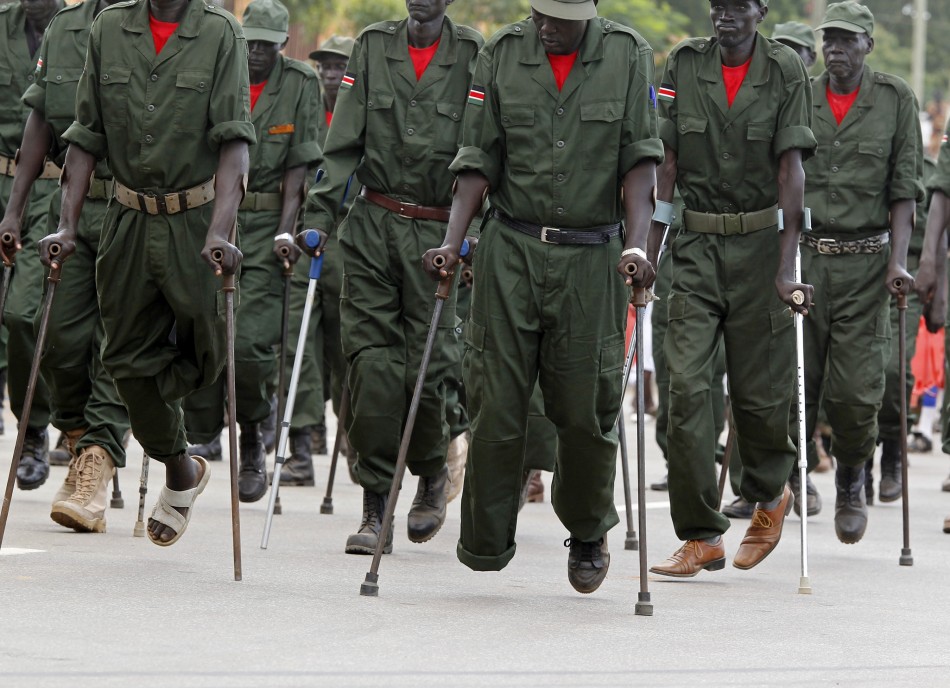
A study conducted by Dr. Michael Deng, a clinical psychologist at the Chaplaincy Corps, has found that over 78 percent of South Sudan’s veterans and ex-combatants face significant mental health challenges, but their needs have largely been overlooked.

Speaking at the launch of the South Sudan Mental Health and Psychosocial Support Strategic Plan 2025–2029 in Juba on Friday, Dr. Michael Deng said a study he conducted last year at the Ministry of Defence revealed high rates of post-traumatic stress disorder (PTSD), anxiety, and depression among former and active service members.

“The study we did was in the Ministry of Defence, looking at post-traumatic disorder and anxiety among ex-combatants and veterans,” Dr. Deng said. “The report indicated that over 78 percent of our men in uniform have mental health needs, and they are neglected.”

The research, conducted as part of Dr. Deng’s PhD studies at an Italian university, involved more than 1,000 participants, including over 500 respondents in 2024.

According to the findings, 79 percent of male participants and 21 percent of female participants reported symptoms of mental health disorders linked to their service and exposure to conflict.

Dr. Deng urged the Ministry of Health to include the Ministry of Defence in the national mental health strategy and ensure services reach military personnel and veterans.

“The Ministry of Defence is part and parcel of this country—especially our men in uniform. These are our brothers and sisters. After service, they go back to the community and they are always with the community,” he said.

“We should make sure that we extend mental health, psychosocial support, and clinical services to support the men in uniform.”

He also called on the government to train specialized personnel better to manage mental health conditions within the armed forces.

“In the Chaplaincy Corps, we have a department of counseling that deals with psychosocial support for men who are injured in the field,” he said.

“In Giada Hospital, we have a lot of people who are traumatized because of the wars that are being fought here and there. Men in uniform have sacrificed themselves to protect this country, and they have mental needs that must be taken care of—whether by families, institutions, or the agencies present here.”

Dr. Deng specifically appealed to the Ministry of Health to support the Health Services Directorate within the Ministry of Defence and the military hospital.

“I’m requesting the Ministry of Health to make sure that the military hospital is supported,” he said. “I’m only seeing ICRC always coming there to support, but we need full support for that department. We need training of mental health counsellors, psychosocial support officers, and psychiatrists.”

Also speaking at the event, National Minister of Health Sarah Cleto Rial said the government is committed to making mental health care a national priority.

“The first pillar is the integration of mental health into primary health care,” Rial said. “We are going to prioritize training of mental health workers, psychologists, counselors, and community health workers.”

She added that the plan also includes fighting stigma, improving mental health literacy, expanding trauma services—especially in humanitarian settings—and advocating for government budget allocations.

“We’ll have to engage our community through awareness, fighting stigma, increasing mental health literacy,” Rial said. “More important is policy, financing, and sustainability. We will be advocating for government budget allocations and, of course, partner support.”

Minister Rial called on development partners, academic institutions, and media organizations to support the plan’s implementation and ensure it reaches marginalized communities.

The Mental Health and Psychosocial Support Strategic Plan 2025–2029, launched under the theme Access to Mental Health Services During Crises and Emergencies,” sets out a national framework to expand mental health services, improve trauma care, and ensure long-term sustainability.

The plan marks a major step toward building a more inclusive and resilient health system in South Sudan. Continue reading “Over 78% of country’s veterans, ex-combatants have mental health needs, study finds”

Minister Celto: ‘We are all traumatized’, mental health must be national priority”

Health Minister Sarah Cleto Rial has called for urgent national attention to mental health, warning that decades of conflict, displacement, and hardship have left nearly every South Sudanese affected by trauma—a crisis prompting a new five-year national strategy launched Thursday in Juba.

Speaking at the launch of the Mental Health and Psychosocial Support Strategic Plan 2025–2029 in Juba on Thursday, Rial said the country’s long history of conflict, displacement, inter-communal violence, and economic hardship has left lasting psychological wounds across generations.

“All of us here were born during conflict and grew up during conflict,” Rial said. “It’s not just a small level of trauma—we are all traumatized. No one is untouched by the problems in South Sudan. It affects our bodies, yes, but also our minds. Mental health cannot be sidelined. Without addressing it, we cannot achieve universal health coverage.”

The newly launched five-year strategy, introduced under the theme “Access to Mental Health Services During Crises and Emergencies, is designed to bring mental health to the forefront of the country’s healthcare agenda.

It seeks to integrate mental health services into primary healthcare systems, expand the training and deployment of mental health professionals, and ensure services are accessible to people across all states and counties, regardless of location or background.

Rial emphasized that the psychological burden in South Sudan is compounded by ongoing displacement, including the arrival of people fleeing conflict in neighboring Sudan.

She said this reality makes it even more urgent to develop a coordinated, inclusive mental health response that reaches vulnerable populations in both urban and rural areas.

She added that the plan will rely on increased government funding and stronger collaboration between ministries, including those responsible for education, justice, defense, social services, and interior affairs.

The Ministry of Health, she said, will ensure that appropriate human, financial, and infrastructural resources are allocated to support implementation.

Policies, guidelines, and professional standards will also be developed to strengthen mental healthcare delivery at every level.

Beyond systems and services, Minister Rial urged communities to reflect on how personal relationships and everyday interactions impact mental well-being. She said change must also begin within households and social circles.

“It starts at home,” she said. “The way the husband treats the wife, the way the mother treats the children—it all has an impact. What we can start to do differently is how we treat one another, how we speak, and how we care. In the poem shared by the young girl, love was placed above all. Our health system must rise to this challenge.”

The strategy is expected to begin with a phased rollout in selected counties, followed by a national scale-up in close coordination with state governments and development partners.

“There is no irrelevant line ministry when it comes to mental health,” Rial said. “This is a shared responsibility, and our future depends on how we respond now.”

President Kiir reconstitutes high-level committee on Abyei final status

President Salva Kiir Mayardit has reconstituted a high-level committee tasked with overseeing dialogue and expediting efforts toward resolving the final status of Abyei.

The committee’s core mandate is to engage with the Government of Sudan and report directly to the President on the progress made in addressing the longstanding issue surrounding Abyei’s status.

The reconstituted committee comprises the following members:

  1. Dr. Benjamin Bol Mel – Chairperson

  2. Pieng Deng Majok – Deputy Chairperson

  3. Minister of Presidential Affairs – Rapporteur

  4. Martin Otimoya – Rapporteur

  5. Minister of Foreign Affairs and International Cooperation – Member

  6. Minister of Defense and Veteran Affairs – Member

  7. Member of Parliament representing Abyei – Member

  8. Director General of Internal Security Bureau, National Security Service – Member

  9. Chairperson, Abyei Oversight Committee – Member

  10. Hon. Dier Tong Ngor, representing Civil Society – Member

  11. Tor Deng Mawien – Member

  12. Deng Deng Akuei – Member

  13. Deng Biong Mijak – Member

The committee is expected to strengthen diplomatic dialogue and accelerate the resolution process for Abyei’s final status between the Republic of South Sudan and the Republic of Sudan.

In early November 2024, the UK Deputy Permanent Representative to the UN said his country remained concerned by the lack of progress towards the resolution of Abyei’s political status and urged the South Sudan and Sudan governments to re-engage in dialogue.

Diplomat James Kariuki made the remarks at the UN Security Council meeting in New York on Tuesday.

While citing Ms. Pobee, UNISFA’s Assistant Secretary-General Mr Kariuki, underscored that despite ongoing tensions, the report stated that there have been no inter-communal clashes since April.

“We remain concerned by the lack of progress on a political solution for Abyei. Sudan and South Sudan must re-engage in dialogue towards the resolution of Abyei’s political status”, said Kariuki in a statment.

He emphasized the importance of UNISFA’s work in maintaining peace in a fragile region to ensure this positive trend continues.

Meanwhile, he stressed the need for the Government of South Sudan and the Sudanese authorities to remove obstacles to UNISFA’s operations.

On 24th January, former Justice Minister Ruben Arol attended a consultative meeting with President Kiir and First Vice President Machar to address the critical constitutional matter concerning the country’s stand on Abyei.

Mr. Arol underlined that the discussion with the Principals aligns with the recent governors’ forum resolution, which mandated that the Abyei legislature and executive committee to present the issue to the national government for consideration.

The justice minister emphasized that the resolution of Abyei’s status is pivotal and that the Council of Ministers’ deliberations would significantly influence the government’s direction on the matter.

– Abyei status –

The Abyei region – rich in natural resources including oil  – remains a point of contention between South Sudan and Sudan since the 2005 Comprehensive Peace Agreement, which granted South Sudan independence.

It is the traditional homeland of the Ngok Dinka, but nomadic Misseriya herders from the north seasonally cross to the region with their cattle in search of water and pasture in the dry season and to trade goods.

In 1972, at the end of Sudan’s first civil war, the Addis Ababa Agreement promised residents of Abyei the right to hold a referendum to determine whether they would remain a part of northern Sudan or join the newly formed southern region.

However, in 1983, Sudan descended into another civil war after President Jaafar Nimeiri refused to implement the agreement and allow Abyei to hold its referendum.

The war ended after signing the Comprehensive Peace Agreement (CPA) in 2005, which included the Abyei Protocol stipulating that the region would remain under special administrative status.

The region was said to hold a status referendum to allow its residents to determine whether Abyei would become part of Sudan or South Sudan.

Following several delays, the Ngok Dinka held the referendum in October 2013 in which they overwhelmingly voted for Abyei to be part of South Sudan, but the result was not recognized by either Sudan or South Sudan.

The referendum was deemed non-binding because there was an impasse on who constitutes a “resident of Abyei” as Sudan insisted that the Messiria tribe, who have historically stayed in the region every year for six months, be allowed to vote.

In November 2024, the administrative government of the region called on the South Sudan government to endorse the outcome of the October 2013 referendum.

But the 8th Governors Forum declined to publicly read out recommendations on the disputed region’s final status, including the call to recognize the referendum results.

On December 23, 2024, the Executive Council of the Abyei Administrative Area then went ahead and unanimously endorsed the results of the referendum officially presented by the high commission of the Abyei Community.

On January 3, First Vice President Machar received the official report of the 2013 referendum on the disputed region’s final status and endorsed it afterwards. The Governance Cluster chaired by Machar then recommended engagement with regional and international organizations to recognize the aspiration of the people of Abyei to be part of South Sudan.

Besides adoption of the Abyei referendum results, the body endorsed operationalization of the Commission for Truth, Reconciliation, and Healing Act, 2024, and the Compensation and Reparation Authority Act, 2024.

The acts are designed to address the legacy of past conflicts and promote peace, national reconciliation, and identify aggrieved persons eligible for reparations and after establishing the necessary funding mechanisms.

The 2018 peace agreement mandates the African Union Commission and the government to set up Hybrid Court to investigate and prosecute individuals suspected of committing crimes since the conflict began in December 2013.

However, since the formation of the unity government, little has been mentioned in regards to Chapter 5 of the peace pact that stipulates the establishment of the tribunal. At present, there is no other justice avenue available for South Sudanese victims of the conflict, apart from the pending Hybrid Court. Continue reading “President Kiir reconstitutes high-level committee on Abyei final status”

MPs to probe Sudan deportation of South Sudanese mothers

The Deputy Speaker of the National Legislative Assembly has directed four parliamentary committees to investigate reports that South Sudanese women are being deported from Sudan without their children.

The order from Hon. Parmena Awerial Aluong followed concerns raised during an extraordinary sitting of parliament on Thursday, where Hon.

Early this week, Renk Commissioner Diing Deng Lueth said the more than 100 women were reportedly arrested in Sudanese cities, put on buses, and sent south, only to be separated from their infants and young children in a traumatic act that local authorities are calling a violation of human rights.

He then took immediate action, halting the buses at the border to prevent further incidents of mothers being separated from their children.

Sudanese Official Cites “Joint Campaign”

Lieutenant Ali Saleh Bilal, head of the Sudanese delegation that transported the deportees, explained that he was acting on direct orders.

“According to the instructions of the Director of the Foreigners Department in Sudan, I was tasked with transporting these citizens to the southern Joda area,” Bilal said. He explained that the action was the result of a “joint campaign against foreigners in the country.”

Bilal confirmed that he had handed over a list of names to the South Sudanese side, noting that some women were with their children while “others were without their children.”

He is now under an obligation by the authorities to return the women to Sudan to retrieve their children before bringing them back to the border.

During a Thursday extraordinary meeting, lawmaker Stephen Bol Lay described the alleged deportations as “inhuman” and urged Sudanese authorities to end the practice.

Hon. Bol told lawmakers that South Sudanese nationals are being forcibly removed from Khartoum to the border town of Renk, with many women reportedly separated from their children in the process.

In response, the Deputy Speaker tasked the Committees on Foreign Affairs, Humanitarian Affairs, Human Rights, and Defense and Security to launch a joint investigation into the matter.

He instructed the committees to coordinate with relevant government institutions, including the Ministry of Foreign Affairs, to address the issue urgently. Continue reading “MPs to probe Sudan deportation of South Sudanese mothers”

Kiir to Nang: Uphold constitutional mandate, act with integrity

President Salva Kiir Mayardit, also the Commander-in-Chief of the South Sudan People’s Defence Forces (SSPDF), has directed the army to stay away from political affairs and remain focused on its constitutional responsibility to defend the country, its people, and their property.

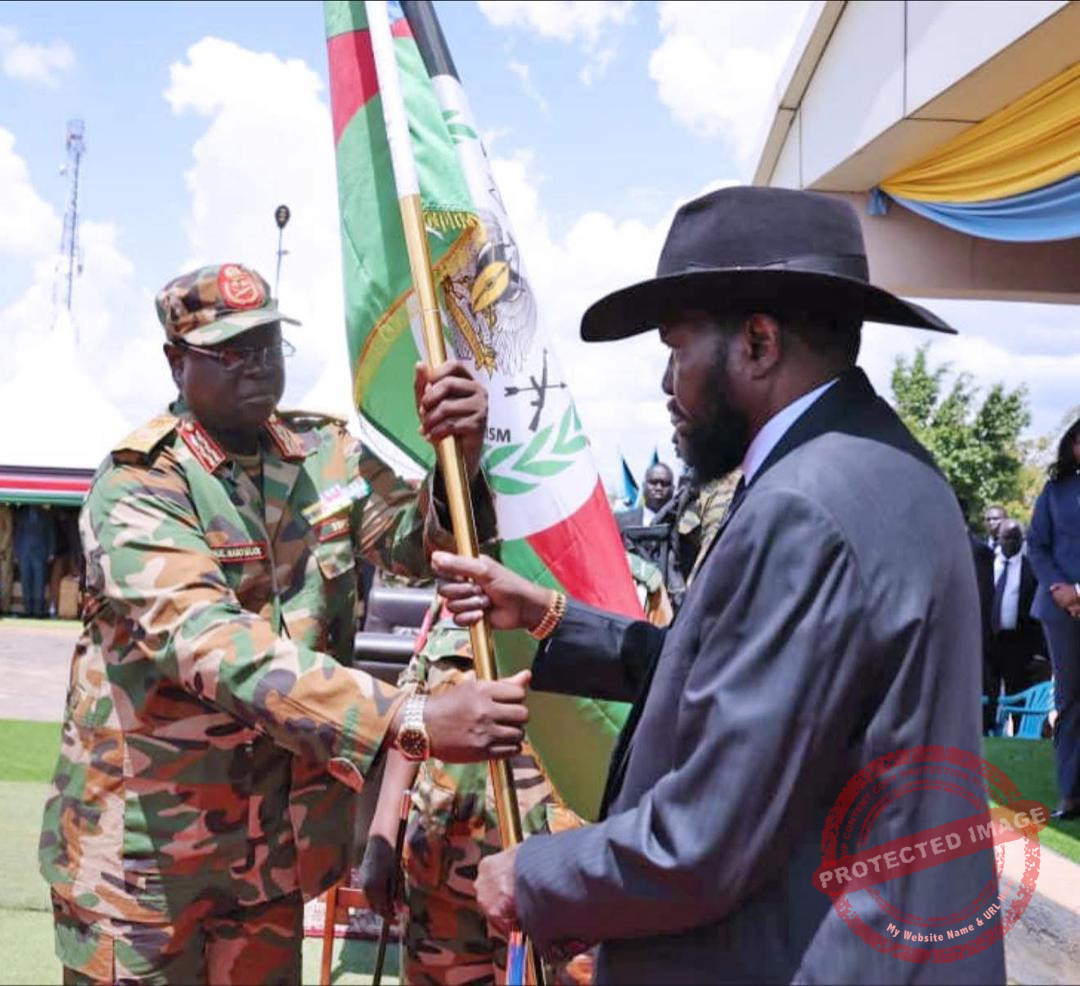
According to a post on the Office of the President Facebook page on Thursday, Kiir made this statement during a leadership handover at the Military Headquarters in Bilpham, where Dr. Paul Nang Majok officially assumed the role of Chief of Defence Forces for the second time, succeeding Gen. Dau Aturjong Nyuol.

In his address, President Kiir stressed the importance of discipline within the armed forces, urging the new leadership to continue the ongoing transformation of the military.

He also called on the new army leadership to prioritize the welfare of soldiers, act with integrity and loyalty, and work together to protect peace, security, and national harmony. Continue reading “Kiir to Nang: Uphold constitutional mandate, act with integrity”

Parliament passes long-awaited national youth development policy, 2025

The National Legislative Assembly has passed the long-awaited National Youth Development Policy, 2025, after a lengthy deliberation during its Thursday morning sitting.

The policy, first introduced to parliament in 2013 and later refined through a public hearing in 2018, was re-tabled last year by former Minister of Youth, Dr. Joseph Geng Akech, before being referred to specialized committees for further review.

According to the Parliamentary Committee on Youth and Sports, the policy aims to create a legal framework that ensures South Sudanese youth realize their full potential in an environment free from discrimination, conflict, and disease.

The policy seeks to empower young people to contribute to peace and security, development, and nation-building, while promoting access to technical and vocational training, entrepreneurship, and health education, including awareness on sexual and reproductive health, substance abuse, and gender equality.

It also focuses on increasing youth participation in community and national development, strengthening the capacity of the Ministry of Youth and Sports, and addressing emerging challenges such as financial inequality, climate change, and the digital divide.

During the committee’s presentation, members emphasized the need for a clear definition of youth, proposing an age bracket of 18 to 45 years, which they said aligns with Article 2 of the Child Act, 2008.

The committee further recommended the immediate operationalization of the Youth Enterprise Development Fund to support innovation and entrepreneurship.

It also proposed that 20 percent of representation in all legislative and executive bodies at every level of government be reserved for young people to institutionalize their political participation.

Additionally, the committee called for 10 percent of the national budget to be allocated to youth development programs such as social projects, enterprise funds, recreation, and sports centers, and that 0.05 percent of non-oil revenue be dedicated to implementing the youth policy.

However, the age bracket issue sparked debate among lawmakers, with some MPs supporting 15 to 35 years, while others backed 18 to 45 years.

A few members also pushed for increasing youth representation from 20 to 30 percent.

After lengthy discussions, the parliament finally passed the National Youth Development Policy with all recommendations and observations.

Hon. Parmena Awerial Aluong, Deputy Speaker of the National Legislative Assembly, presided over today’s sitting

The policy was presented to the August House by Hon. Deng Tong on behalf of the Committee on Youth and Sports.

Continue reading “Parliament passes long-awaited national youth development policy, 2025”

South Sudan’s IMF debt hits $246M, ranks 50th among 86 heavy borrowers

South Sudan now ranks among the top debtor nations to the International Monetary Fund (IMF), with an outstanding balance of US$246 million in Special Drawing Rights (SDRs), according to newly released IMF data tracking global credit obligations as reported by Al Jazeera.

The figure represents the full extent of South Sudan’s quota and current borrowings, signalling that the country has drawn beyond its standard allocation.

The IMF report places South Sudan 50th out of at least 86 countries that collectively owe over US$162 billion to the global lender.

This mid-tier ranking underscores the country’s increasing reliance on IMF support amid persistent economic and political instability.

The outstanding debt includes both disbursed funds and repayment obligations, positioning South Sudan in a sensitive spot where future borrowing could be subject to tighter scrutiny and policy conditions.

Countries with high IMF debt burdens often face stringent economic reforms and austerity measures as part of continued financial support.

South Sudan’s growing liability comes at a time of deep economic strain.

Last week, the World Bank ranked the South Sudan Pound among the weakest currencies in Africa, noting a 10% drop in value this year alone.

The decline was attributed to reduced oil exports following damage to critical pipeline infrastructure amid ongoing conflict in neighbouring Sudan.

The report, Africa’s Pulse: Pathways to Job Creation in Africa, flagged South Sudan’s shrinking currency alongside the Ethiopian Birr, citing inflation, low revenues, and conflict-related disruptions as key drivers of economic instability.

With debt service obligations mounting, analysts warn that South Sudan must balance development goals with IMF-imposed conditions while avoiding default.

Maintaining good standing with the IMF remains crucial for unlocking future funding, technical support, and access to concessional lending from other global institutions.

Currently, a high-level delegation from South Sudan, comprised of officials from the Bank of South Sudan and the Ministry of Finance, is in the US, discussing with the World Bank on a potential partnership. Continue reading “South Sudan’s IMF debt hits $246M, ranks 50th among 86 heavy borrowers”

Support Eye Radio, the first independent radio broadcaster of news, information & entertainment in South Sudan.

Make a monthly or a one off contribution.