9th June 2026

Traffic police chief orders removal of unauthorized tinted windows

 The Director General of the South Sudan Traffic Police Service, Maj. Gen. Kon John Akot, has issued a directive instructing all drivers of public and private vehicles with tinted windows to remove them immediately if they do not have official authorization.

Speaking during an appearance on SSBC yesterday, Maj. Gen. Kon clarified that the move is not a crackdown on drivers, but part of broader efforts to enforce traffic laws and improve road safety across the country.

“Anyone who has tinted his car without permission from the General Traffic Department must remove the tint or report it to the department,” said Maj. Gen. Kon.

“He must rectify his situation before he is dealt with. I repeat – this is not a crackdown; it’s an action against violators.”

He added that while the official crackdown had ended, law enforcement is now focused on correcting traffic violations through education and enforcement — with an emphasis on tolerance and cooperation.

The Traffic Police Chief also called on drivers and vehicle owners to complete their vehicle insurance procedures and comply fully with all traffic regulations.

Maj. Gen. Kon further urged drivers in Juba to wear seatbelts at all times, stressing that doing so significantly reduces the risk of injury in traffic accidents.

“We are in the process of enforcing the law and correcting violations. However, there must be tolerance with violators,” he said.

The South Sudan Traffic Police Service is expected to continue public awareness campaigns alongside enforcement measures to ensure safer roads and more responsible driving behavior. Continue reading “Traffic police chief orders removal of unauthorized tinted windows”

Families in Malakal turn to prisons amid mental health care crisis, says MSF

Families in Malakal, Upper Nile state are increasingly sending relatives with severe mental health conditions – not to hospitals, but to prison, according MSF’s mental health activity manager.

That’s according to Médecins Sans Frontières – or MSF – who say this desperate measure highlights a critical shortage of psychiatric care in the region.

Laura Ximena, MSF’s Mental Health Activity Manager, explains that for many families, detention centres have become the only option when loved ones show severe symptoms. In her words – While far from ideal, it’s often the only place people can be kept safe or receive any care at all.”

MSF currently runs mental health programmes at Malakal Teaching Hospital and at the Central Prison. They report that patients with psychosis, bipolar disorder, and severe depression are being locked up… simply because there’s nowhere else to treat them.

Between January and August this year, MSF carried out over 1,100 mental health consultations – with more women than men seeking help. Twelve patients reported suicidal thoughts, and April saw the highest number of such cases.

One man, 33-year-old Samat Nyuk, shared his story of being sent to prison by his own family when traditional remedies failed.

He said – “I knew I was unwell, but not a criminal. What hurt most was that my own family chose prison instead of treatment.”

Samat was confined to a small, isolated cell in Malakal Central Prison in June, where MSF provided limited psychiatric support.

South Sudan’s mental health crisis is largely invisible – but widespread. Decades of conflict, displacement, poverty, and hunger have left deep psychological wounds. And instability continues to disrupt what few services exist.

Survivors of sexual and gender-based violence are especially vulnerable, often lacking access to both mental health and legal support.

MSF continues to offer follow-up care in prison and across the community, including counselling, medication, and awareness sessions for health workers and families.

Laura Ximena stresses that “With proper medication, counselling, and support, recovery is possible – but it’s fragile without food, safety, and a functioning health system.”

MSF is now calling on authorities to fully integrate mental health services into South Sudan’s primary healthcare system – ensuring trained professionals, essential medications, and community support are available at every level.

Torit Council launches food import program to cut living costs

The Mayor of Torit Municipal Council has announced a new initiative aimed at easing the burden of high food prices by importing essential commodities to be sold to retailers at subsidized prices.

Mayor Ohito Babtist said the local government has contracted several companies to bring in basic food items such as sugar, cooking oil, and flour, which will then be made available to local traders at wholesale prices.

The goal, he explained, is to help stabilize market prices and make food more affordable for the general public.

“This is a cooperative that is supposed to work to reduce prices during this economic crisis,” Mayor Ohito told Eye Radio in an interview from Torit on Tuesday.

“We get companies—from across and globally—to supply at subsidized prices where our citizens and businessmen have to lower their prices.”

He said the initiative is being funded through local revenue collections and stressed that community support and cooperation are key to its success.

According to the Mayor, over 4,000 bags of sugar have already arrived in Torit. Additional supplies, including cooking oil and other consumables, are currently en route from Somalia, Malaysia, Kenya, and Uganda.

“As of now, we have the sugar,” Ohito said. “The food is already on the way, including oil. The oil is coming from far—it takes about 45 days to reach our destination. Other food items, like flour and pepper, are coming from Uganda and Kenya.”

Mayor Ohito said the municipal council will continue working with partners to ensure consistent supply and distribution of the subsidized goods.

According to Ohito, the initiative is intended to support low-income families and curb the effects of inflation on household food budgets.

“This is about helping our people access affordable food and reducing the burden of living costs in these tough economic times,” he said.


Nimule Mayor swears in advisory board to boost municipal governance

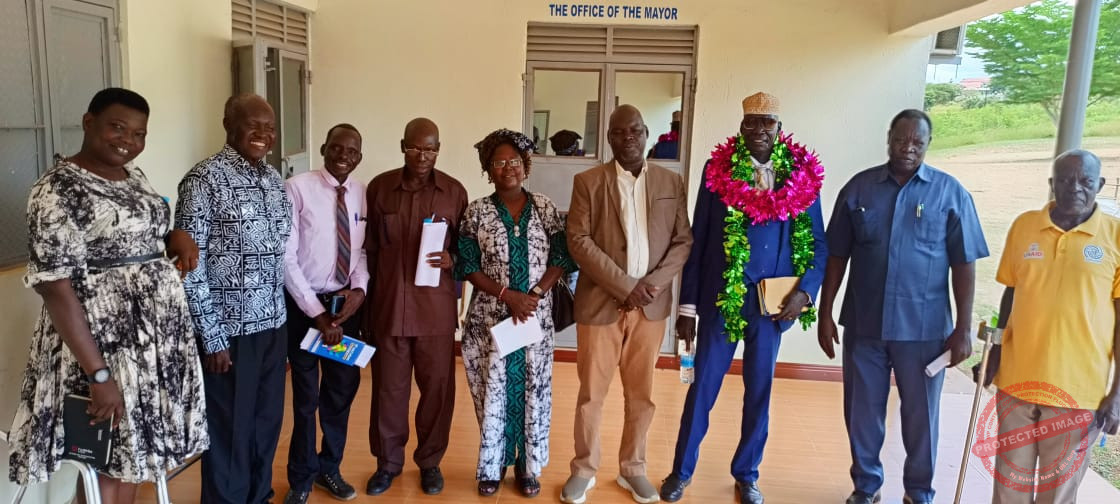
Authorities in Eastern Equatoria State have officially sworn in ten members of an advisory board at the Nimule Mayor’s Office earlier today.

Speaking to Eye Radio in an exclusive interview, Mayor Caesar Longa Fuli confirmed the inauguration, stating that the advisory board will support his office on a wide range of issues, including gender affairs, current affairs, security, persons with special needs, education, and health.

“Today, we conducted the swearing-in ceremony for the advisors at the mayor’s office. Their role is to guide and advise the mayor on various issues such as gender, current affairs, security, persons with special needs, education, health, and many other areas,” said Mayor Longa.

“Previously, I felt that my efforts alone were not enough. I believe that bringing these advisors into the mayor’s office will significantly improve our operations, as they will support me across different departments and help us serve the community better.”

According to the mayor, the appointments were made under an official internal order of the Nimule Municipal Council, based on gubernatorial decree No. 4/2025 dated 2nd May 2025.

The list of appointees is as follows:

1. Jua Agnes Amileto-Advisor on Gender issues
2. John Andruga-Advisor on Public Relations and Current Affairs
3. Jerom Surur-Advisor on Peace and Reconciliation
4. Adauta Drali- Advisor on Culture and Heritage
5. Yemba Micky Amoko-Advisor on Land and Utility
6. Wiliam Ibrahim Kenyi-Advisor on People with Special Needs
7. Kirinya Joseph-Advisor on Education
8. Shaban Abdallah- Advisor on Security and Safety
9. Mogga Alfred-Advisor on Business Affairs
10. Alex Odendi Lazarious – Assistant Inspector of Land-Nimule Municipality

Mayor Longa expressed optimism that the advisory board will enhance the efficiency of municipal operations and deepen service delivery to the people of Nimule.

He also urged the public to support the newly appointed board to ensure they achieve meaningful results.

“What I want to tell the people of Nimule Municipality is that we stand stronger together, and we risk falling apart if we are divided,” he stated.

“Nimule, being a town that hosts all 64 tribes along with international residents, should serve as a model of unity and cooperation. I call upon everyone to work hand in hand to build a better South Sudan and a better Eastern Equatoria.

Our motto, he said ‘One People, One Nation,’ emphasizes the importance of unity and trust among us.”

According to Longa, the move aims to foster mutual understanding and collaboration.

“In this advisory board, we have representatives from various tribes and backgrounds, some who have lived here for many years. Our diversity is a strength, and it is important that everyone contributes towards our shared progress.”

The mayor said that the diversity of the board reflects the multi-ethnic nature of Nimule, and he hopes it will serve as an example of inclusive governance. Continue reading “Nimule Mayor swears in advisory board to boost municipal governance”

Kenya’s deeply admired opposition leader Raila Odinga laid to rest

Former Kenyan Prime Minister Raila Odinga, described as an “enigma,” has been laid to rest, with tens of thousands of mourners gathering at his family farm in siaya county for his final farewell.

The late former Prime Minister, who championed multi-party democracy and played a key role in helping Kenya achieve a people-driven constitution, died on Wednesday in India while undergoing treatment.

His burial ceremony, held in his political stronghold in western Kenya, drew massive crowds who came to pay their last respects to a man widely regarded as a symbol of democratic struggle in the country.

President William Ruto attended the funeral and pledged to honor Odinga’s legacy. He also promised to implement a development plan the two leaders had reportedly agreed on—aimed at lifting Kenya into the ranks of first-world nations.

The plan includes building standard road networks linking cities and rural areas, and the construction of a modern international airport.

Before dawn, mourners began arriving in Kisumu, a lakeside city near Lake Victoria. The region is not only Odinga’s home base, but also the ancestral homeland of former U.S. President Barack Obama, who posted a tribute on X, calling Odinga a “true champion of democracy.”

Tearfund, Eco Clean launch recycling initiative to empower waste pickers

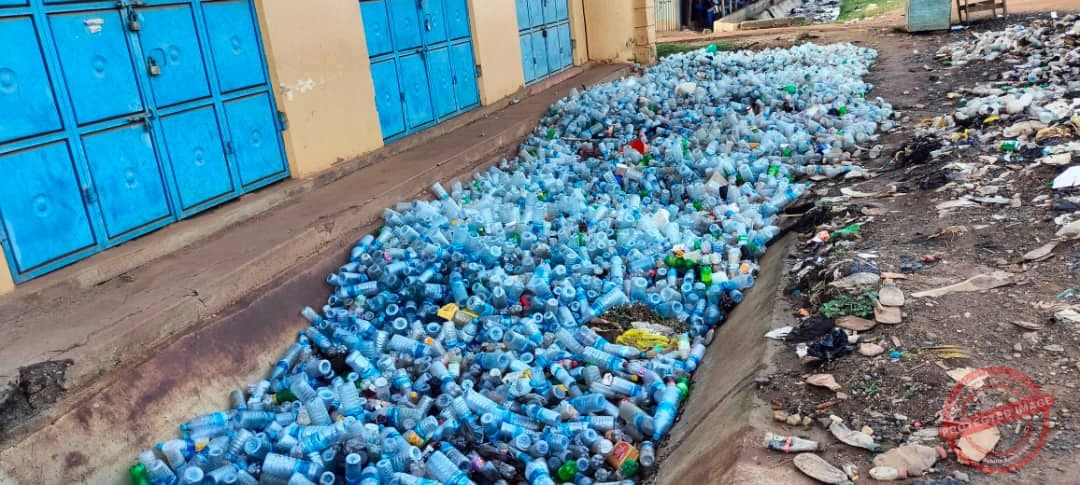
Tearfund South Sudan, in partnership with Eco Clean, has launched a new plastic recycling initiative aimed at integrating informal waste pickers into the formal waste management system and improving their livelihoods.

Speaking to Eye Radio’s Sundown program on Friday, Charles Maina, Tearfund’s Senior Associate for Informal Livelihoods, said the project will focus on training waste pickers in practical skills such as forming and managing self-help groups like Village Savings and Loan Associations (VSLAs).

“We need to begin recognizing waste pickers as individuals who make valuable contributions to our communities and the environment,” Maina said.

“Acknowledging their role is essential, and from there, we can explore ways to enhance their incomes, recognizing the economic importance of their work.”

He noted that waste pickers currently earn very little for their work, with the price of a kilogram of plastic selling for just 300 South Sudanese Pounds (SSP). In addition to the low earnings, Maina said the informal workers operate under unsafe conditions.

“Their working conditions pose significant health and safety concerns. Many lack proper safety equipment, and if they are injured on the job, they often lose days of work and income,” he added.

“It’s crucial that we address both their economic needs and working conditions to support and empower them effectively.”

Also speaking on the program, Alice Sabuni, CEO of Eco Clean, said the low value placed on plastics in Juba is due to the absence of companies that process recyclable materials in South Sudan.

“In the context of Juba, unlike Uganda and Kenya, materials labeled as recyclable are highly valued there because those countries have established plastic and aluminum recycling facilities,” Sabuni explained.

“In Juba, however, such infrastructure is lacking. Most recyclables here refer to scrap metals, which hold value because they can be easily collected and sold. But plastics have little value as there are no companies to buy or process them.”

Sabuni called for the establishment of active recycling companies in South Sudan to boost the sector and generate income opportunities for informal workers.

According to Tearfund, the initiative is part of a broader solid waste management project aimed at addressing systemic challenges faced by waste pickers and reducing environmental and public health risks.

Media reports indicate that plastic waste is an escalating global issue, and in South Sudan, rapid urbanization has led to a sharp increase in waste production, particularly in urban centers like Juba. Continue reading “Tearfund, Eco Clean launch recycling initiative to empower waste pickers”

Tore community conditionally agrees to Lantoto National Park Conservation

The Land Committee in Tore Payam, Yei River of Central Equatoria says the community has agreed to allow wildlife conservation activities to continue in Lantoto National Park, but with firm conditions that must be met.

Speaking after a stakeholder meeting held two weeks ago, Salah Aggrey, Secretary General of the Land Committee, said the dialogue brought together national and state wildlife authorities, the Enjojo Foundation, traditional chiefs, and local leaders.

Aggrey confirmed that all parties agreed to proceed with conservation efforts — but only on the condition that the project is community-driven and follows a bottom-up approach.

“We have agreed on the conversation, particularly. But most importantly, it should be community-driven. So, it should be a bottom-up approach. We still insist, as a community, to be part of the decision-making,” Aggrey said.

“[Enjojo Foundation] already signed an MoU with the Ministry — but we’ve demanded to see the terms. And we want a new MoU that also includes the community, with roles clearly spelled out — for us, for the NGO, and for the government.”

The committee also called for full transparency regarding the existing Memorandum of Understanding (MoU) between Enjojo Foundation and the national Ministry of Wildlife Conservation and Tourism.

They demanded the signing of a new MoU that includes the community as a key stakeholder with clearly defined roles for each party.

Aggrey further emphasized the community’s concern about the park’s boundaries and the risk of displacement.

“Our position remains strong that such a developmental project should not, by any means, lead to people’s displacement. There must be a clear buffer zone — and we say the park should remain only in the southern part. That’s what we’ve presented,” he said.

“Yes, a compromise was reached, and we agreed for the conservation to proceed. But we are still expecting more engagement and transparency from both the ministry and Jojo.”

While the tentative agreement allows conservation activities to move forward, Aggrey said ongoing dialogue is vital to protecting the rights and interests of the local community.

Two policemen killed, two civilians injured in Rumbek North attack – official

Two police officers were shot dead and two civilians wounded in an attack in Rumbek North County on Saturday night, according to Lakes State authorities.

The incident happened in Madol Payam, where a group of locals, including the victims, was returning from a fishing trip when they were ambushed by armed men.

William Koji Kerjok, the acting Minister of Information in Lakes State, confirmed the attack to Eye Radio on Sunday.

“There was a report from Rumbek North, where two people were killed — shot dead,” Kerjok said. “They were suspected to be coming from Panyijiar County of Unity State.”

He said the victims included two police officers who were killed instantly, while two civilians sustained gunshot injuries.

“They killed two people — they were members of the police. And then two people were injured — they were civilians,” he explained. “They were coming back from the river, where they had gone for fishing.”

No group has claimed responsibility for the attack, and the identities of the assailants remain unknown

However, authorities believe the attackers crossed from neighboring Unity State

Several calls to the Panyijar County commissioner went unanswered.

Kerjok added that additional security has been deployed to the area to prevent further incidents. Continue reading “Two policemen killed, two civilians injured in Rumbek North attack – official”

Revenue-sharing plan under discussion to address passport, ID shortages -official

The Director General of the Directorate of Civil Registry, Nationality, Passports and Immigration says a proposed revenue-sharing plan is being discussed to resolve periodic shortages of passports and national ID booklets, and operational challenges, including expensive electricity costs.

Major General Elia Costa revealed the proposal during an interview on Eye Radio’s Around South Sudan program on Friday.

He said the plan, under discussion between the Ministry of Finance, the National Revenue Authority (NRA), and the company contracted to provide immigration documents, aims to ensure the timely availability of critical identification materials by settling outstanding claims.

“The company owners have cash claims on us as part of the remaining payments,” Costa said.

“If this money is paid, we have an agreement with the Ministry of Finance and the National Revenue Authority that the revenue split will be 50% — 50% goes directly to the company and 50% goes to the government.”

He explained that under the proposed arrangement, if, for example, a passport costs $100, half would go to the government and half to the company to cover production and service costs.

“This is so that we do not have arrears and claims from the Ministry of Finance. The company’s share is deposited into its account,” he added.

Costa clarified, however, that while there is understanding among the parties, no final agreement has been signed yet.

“There is no agreement in force yet, but these are under discussion,” he said.

According to Costa, the company is currently claiming more than $800,000 in unpaid fees for recent maintenance and service provision, including support for critical systems used in the issuance of passports and ID cards.

“Of course, there are more than $800,000 in claims that are part of the costs of computer maintenance services,” he said.

“The company recently carried out maintenance, and the amount was not paid, but currently we are working well with the Ministry of Finance to settle the matter as soon as possible. After that, things will be fine with the company, and we will be able to provide citizenship cards and passports.”

Costa also highlighted broader operational challenges facing the directorate, particularly high electricity costs.

“Our biggest problem in management is the electricity issue,” he said. “

Electricity costs us $600 a day, and it has to be available 24 hours a day. This means that any money we get goes towards electricity costs. This is the biggest challenge we face here, in addition to the delay of nationality cards and passports.”

The Directorate of Immigration has faced periodic shortages of passport booklets and ID cards in recent years, often attributed to logistical and financial constraints.

Activist, researcher react to presidential committee on Abyei

While one civil society activist welcomed President Salva Kiir Mayardit’s decision to reconstitute a high-level committee on Abyei as long overdue, a researcher urged caution, citing ongoing instability in Sudan as a challenge to genuine dialogue.

On Friday, President Kiir formed a committee with a mandate to engage the Government of Sudan and provide regular updates to the President on efforts to resolve the long-standing political and administrative uncertainty surrounding Abyei.

The initiative comes at a time when international partners are calling for renewed negotiations between South Sudan and Sudan, particularly amid evolving regional dynamics.

Civil society activist Edmund Yakani, Executive Director of Community Empowerment for Progress Organization (CEPO), welcomed the decision as a positive and timely step.

“I would like to take this opportunity, with respect, to appreciate His Excellency the President for forming a committee for fast-tracking the final status of the Abyei Administrative Area,” Yakani said.

“This is a remarkable decision and a long-awaited one. We feel, as civil society, that the decision on the fate of RBA should rest upon the sons and daughters of the Abyei Administrative Area, as per the provisions of the Comprehensive Peace Agreement, specifically the Abyei Administrative Protocol.”

Yakani further called on leaders in both Juba and Khartoum to demonstrate good faith in supporting the process.

“We are calling upon the political leadership in South Sudan and in Sudan to ensure genuine and honest cooperation in determining the final status of Abyei Administrative Area,” he said.

“Leaving the issue unresolved since 2005 is an absolute violation of the civil, political, and social rights of the people of Abyei.”

Meanwhile, researcher and policy analyst James Boboya raised concerns about the timing of the initiative, pointing to Sudan’s internal instability as a challenge to immediate dialogue.

“The president of the Sovereign Council of Sudan is preoccupied in terms of bringing peace and stability to Sudan,” Boboya said.

“He does not even have authority over all the borders of Sudan because he’s fighting the RSF, and the RSF is also fighting the Sudan government because the RSF wants to make sure that they are in control of the entire Sudan.”

He said the situation presents serious difficulties for engaging in any concrete discussions over Abyei at the moment.

“So, there’s a lot of confusion militarily, politically, socially, and economically, and so they have no time to discuss the situation in Abyei,” he continued.

“But I wish that the President really, you know, have a dialogue in terms of what the people of Abyei and the South Sudanese want to achieve, and then the spirit of dialogue—when the peace comes to Sudan—then maybe this kind of decision is made. But let us see what happens moving forward.

In 2013, the Ngok Dinka community held a unilateral referendum in which the vast majority voted for Abyei to join South Sudan.

However, the results were not recognized by either Juba or Khartoum and remain non-binding under international law.

The reconstitution of the Abyei committee is viewed as a renewed effort to break the deadlock and work toward a peaceful resolution. Both activists agree that the voices of the local communities must be central to any decisions made regarding the region’s future. Continue reading “Activist, researcher react to presidential committee on Abyei”


Support Eye Radio, the first independent radio broadcaster of news, information & entertainment in South Sudan.

Make a monthly or a one off contribution.