9th June 2026

Governor Mujung orders tough action after six children abducted in CES

Governor Lt. Gen. Rabi Mujung Emmanuel ordered a crackdown on illicit alcohol and drug abuse and instituted tough security measures after six children were abducted at Aru Junction on Sunday. The State Minister of Local Government, Leon Abe Brown, made the announcement.

Continue reading “Governor Mujung orders tough action after six children abducted in CES”

IOM commends Malakal efforts, calls for stronger partners’ support for returnees

The International Organization for Migration (IOM) has reaffirmed its commitment to helping South Sudanese returnees from Sudan rebuild their lives after displacement caused by the Sudan conflict but urged collaborate with many other entities.

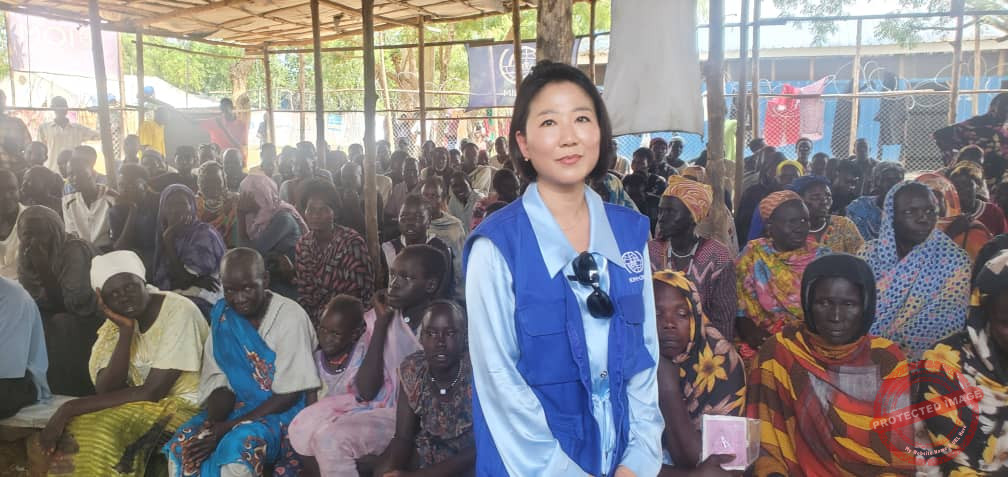
During a visit to the Malakal Transit and Bulukat Centers, IOM’s Deputy Director for Management and Reform, Ms. SungAh Lee, hailed the ongoing humanitarian operations as a powerful demonstration of resilience, partnership, and international solidarity.

“First of all, I’m really impressed with the operation here. I am meeting families who went through a long journey to come and arrive here in Malakal. The current funding situation is challenging. That’s why we need to first really collaborate with many other entities, other UN agencies, but also governments and local communities,” Ms. Lee said.

“Second, we want to make sure that our humanitarian work also leads to transition, recovery, and resilience—empowering the local community and local stakeholders so they can continue to live with dignity and stability in their life. One is to build resilience. We need to have essential infrastructure and basic services covered. Second, we need to provide capacity building, skills, learning, so that local communities can continue this work forward.”

Ms. Lee stressed that IOM’s humanitarian efforts must go beyond immediate relief, focusing on transition, recovery, and long-term resilience to ensure displaced families can regain dignity, stability, and self-reliance.

Her remarks come as the Bulukat Transit Center continues to host hundreds of returnees each day, providing food, shelter, healthcare, and protection services for people fleeing the Sudan conflict.

Since its establishment in mid-2023, the center has supported over 223,000 people, through collaboration between IOM, UNHCR, and the Government of Upper Nile State.

Ms. Vijaya Souri, IOM’s Chief of Mission in South Sudan, said the relocation operation was primarily designed as a humanitarian initiative to decongest overcrowded sites and move people to areas where they have stronger social and family networks.

She clarified that while there is no specific reintegration package linked directly to this operation, returnees and displaced persons continue to benefit from existing assistance programs in their new communities.

“The operation was designed to connect people to ongoing support initiatives rather than create new programs specifically for the relocated groups,” Ms. Souri explained.

The IOM continues to call on the international community and development partners to sustain and expand support for initiatives that empower returnees to rebuild their lives and strengthen community resilience across South Sudan. Continue reading “IOM commends Malakal efforts, calls for stronger partners’ support for returnees”

Traditional kingdoms unite to support South Sudan’s peace, governance efforts

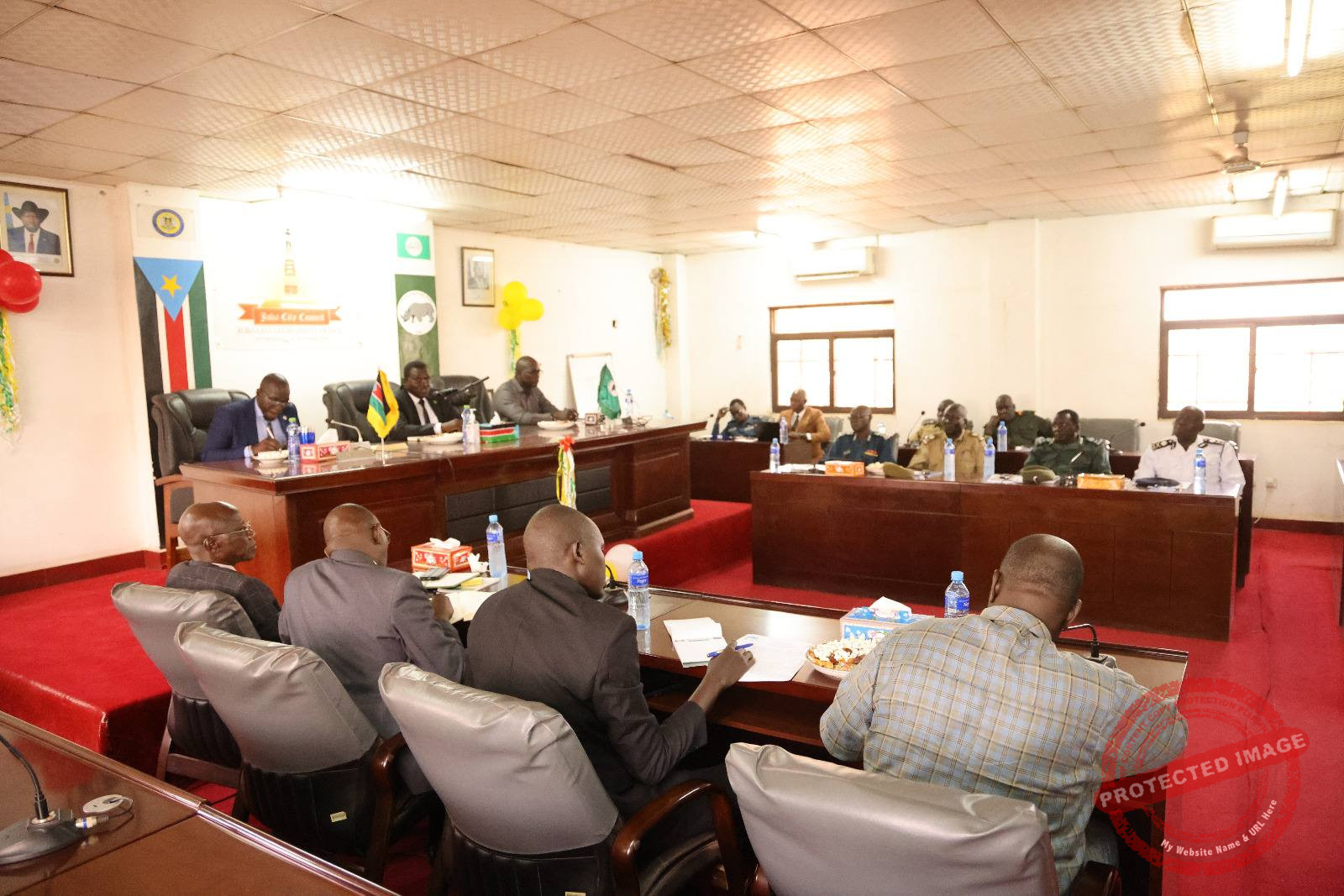
The kingdoms of Azande, Anyuak, and Shilluk have pledged to support the South Sudan government in addressing conflicts and other national challenges.

The announcement came during a conference on inclusive peacebuilding held in Juba on Monday.

The two-day event, organized by the Bureau of Religious Affairs at the Office of the President in collaboration with peace partners, brought together traditional leaders, women, youth, faith-based organizations, and other stakeholders to discuss dialogue-based approaches to community peacebuilding.

Prince Tadeo Mario Sasa, Prime Minister of the Azande Kingdom and head of the newly formed National Council of Traditional Authorities of South Sudan, explained the kingdoms’ role:

“The kingdoms of Azande, Anyuak, and Shilluk have all committed to supporting South Sudan government, despite not yet having official kingdom representation, due to ongoing conflicts within the country.

“They have convened all traditional chiefs to form the National Council of Traditional Authority of South Sudan, which I am currently leading. Additionally, other stakeholders, including traditional chiefs, are also involved in this effort.”

Prince Tadeo emphasized the importance of traditional authorities in governance and conflict mediation:

“Our goal is to recognize that the responsibility cannot rest solely on the National Legislative Assembly and the Council of States without including the traditional authorities, such as the traditional chiefs, who are vital to the country’s governance. There is a need for a National Council of Traditional Authorities to complement their efforts, ” he said.

“This council would play a crucial role in mediating conflicts, advocating for efficient service delivery to ensure public funds are properly utilized, and securing spaces for schools, hospitals, and other public facilities within our communities. These are some of the visions we hold for the future.”

The conference highlighted key areas of focus, including conflict resolution, constitution-making, service delivery, and collaborative governance. Continue reading “Traditional kingdoms unite to support South Sudan’s peace, governance efforts”

BoSS sets January 2026 deadline for banks to join national payment system

The Bank of South Sudan (BoSS) has directed all licensed commercial banks in the country to connect to the South Sudan Interbank Payment and Settlement System (SSIPSS) within three months or face penalties.

In a circular dated November 4, 2025, and signed by the Governor of the Central Bank, Dr. Addi Ababa Othow, BoSS announced that the mandatory connection follows the successful launch of the SSIPSS on October 10, with thirteen commercial banks already operating on the platform.

“The SSIPSS represents a significant milestone in strengthening the efficiency, security, and stability of the national payment infrastructure,” Dr. Othow stated.

According to the circular, all commercial banks are required to complete their connection to the system by January 31, 2026. The directive, issued under Section 12(1) of the Bank of South Sudan Act, 2011 (as amended in 2023), makes participation in the payment platform compulsory for all licensed financial institutions.

BoSS warned that any bank failing to meet the deadline will face strict regulatory measures, including a late connection charge of USD 100,000 or its equivalent in South Sudanese Pounds at the prevailing rate.

“Persistent failure to comply may result in additional regulatory penalties, including restrictions on participation in certain interbank operations or other sanctions as deemed appropriate by the Bank of South Sudan,” the circular reads.

The Central Bank also said it reserves the right to publicly disclose the names of non-compliant institutions.

Dr. Othow emphasized that full integration into the interbank payment system is essential for achieving “a modern, efficient, and interoperable national payments ecosystem.”

He added that the Bank remains committed to supporting all financial institutions during the onboarding process and encouraged commercial banks to coordinate with the National Payment Systems Department for technical assistance and implementation guidance.

“All commercial banks are therefore urged to give this directive utmost priority and ensure full compliance within the specified timeframe,” Dr. Othow said.

The SSIPSS aims to modernize South Sudan’s financial sector by improving transaction efficiency, strengthening security, and promoting digital and cashless payments across the country.

Continue reading “BoSS sets January 2026 deadline for banks to join national payment system”

Trade minister, BoSS governor urge traders to keep money in banks

The Governor of the Bank of South Sudan (BoSS), Dr. Addis Ababa Othow Akongdit, and the National Minister of Trade and Industry, Atong Kuol Manyang Juuk, have called on traders to deposit their business earnings in commercial banks to help stabilize prices and strengthen the country’s financial system.

The appeal followed a high-level meeting held at the Central Bank headquarters in Juba, where the two officials discussed ways to coordinate policies aimed at maintaining price stability and promoting private sector reforms.

Minister Atong urged business owners across the country to use banks for their transactions, describing the banking system as the safest and most reliable place to keep money.

She also briefed the BoSS leadership on her recent visit to Türkiye, where several investors and banks reportedly showed interest in setting up operations in South Sudan.

Dr. Othow, for his part, said the meeting was vital in deepening cooperation between the Central Bank and the Ministry of Trade.

He reaffirmed their shared commitment to stabilizing the market and restoring public confidence in the financial sector.

Both officials emphasized that closer coordination between the two institutions will help rebuild trust, promote financial discipline, and ensure lasting stability in South Sudan’s banking system.

Tanzania’s authorities lift curfew in main city after election unrest

Tanzanian police have lifted a night-time curfew imposed since last Wednesday in the main city Dar es Salaam following deadly election protests, as life slowly returns to normal across the country according to the BBC.

Following the unrest, the internet was cut nationwide and most shops in Dar es Salaam closed amid acute shortages of basic essentials and soaring prices. Schools shut and public transport came to a halt.

On Tuesday, some shops reopened and traffic resumed but with queues persisting at some petrol stations in Dar es Salaam.

Families continue to search for or bury relatives killed in the clashes between the security forces and opposition supporters who denounced the poll as a sham.

The two main opposition leaders were unable to contest the poll – Tundu Lissu is in detention on treason charges, which he denies, while Luhaga Mpina’s candidacy was rejected on technical grounds.

Internet services are slowly being restored, though social media remains restricted. Police have warned against sharing images from the protests.

Lissu’s Chadema party told the AFP news agency that it had recorded “no less than 800” deaths by Saturday, while a diplomatic source in Tanzania told the BBC there was credible evidence that at least 500 people had died.

The UN human rights office earlier said there were credible reports of at least 10 deaths in three cities. The government has not given casualty figures.

Chadema now says its deputy chairman John Heche has gone missing after being picked up from a police station in the capital, Dodoma, on Tuesday morning.

The party said Heche’s wife and another party official were told he was being taken to see the regional police commander, but “when they tried to follow them to find out where he was being taken, the vehicles carrying him sped off, leaving them behind”.

“His whereabouts remain unknown, and his family and the party are deeply concerned about his safety and current location,” Chadema added in a statement.

The police have refused to comment and told the BBC to contact the government spokesperson, who has not responded.On Tuesday, a doctor at Muhimbili Hospital in Dar es Salaam told the BBC that vehicles marked “Municipal Burial Services” had been collecting bodies.

“[They] are getting into the mortuary at night to pick bodies of those believed to have died during protests, they leave and take them to unknown destination,” said the doctor, who asked not to be identified for safety reasons.

“Relatives are not being given the bodies and survivors are being taken from emergency department to unknown destination by the police… some even before they recover,” he added.

Earlier, a Tanzanian woman who asked to be identified as Mama Kassim told the BBC that she had not seen her two sons since polling day – and was unable to reach one of them.

“I don’t know where he is, I don’t know whether he has been arrested, I don’t know if he is injured, I don’t know if he is hospitalised, I don’t know if he is dead. Oh God, protect my son. He’s only 21 years old,” she said.

A Kenyan family said it had asked the government to help repatriate the body of a relative, 33-year-old teacher John Okoth Ogutu, who lived in Dar es Salaam.

A teacher at Sky School, he was allegedly shot by police while on his way to buy food at Gaba Centre in the city.

His older sister, Celestine Ogutu, told the BBC he was a loving, hard-working man who hated arguments and would walk away from any confrontation.

“He loved the family. The last time I talked to him was on 22nd September when he was wishing me my birthday, the only family member who remembered my birthday,” she said.

Campaign group Human Rights Watch (HRW) said the authorities had responded to the widespread protests following the elections “with lethal force and other abuses”.

It urged the government “to respect rights and ensure that all those responsible for violence are investigated and appropriately prosecuted”.

Amnesty International said it was alarmed by the use of excessive force to suppress protests that had resulted in the deaths and injuries of protesters.

The government has sought to downplay the scale of the violence and has blamed foreign nationals for stoking it.

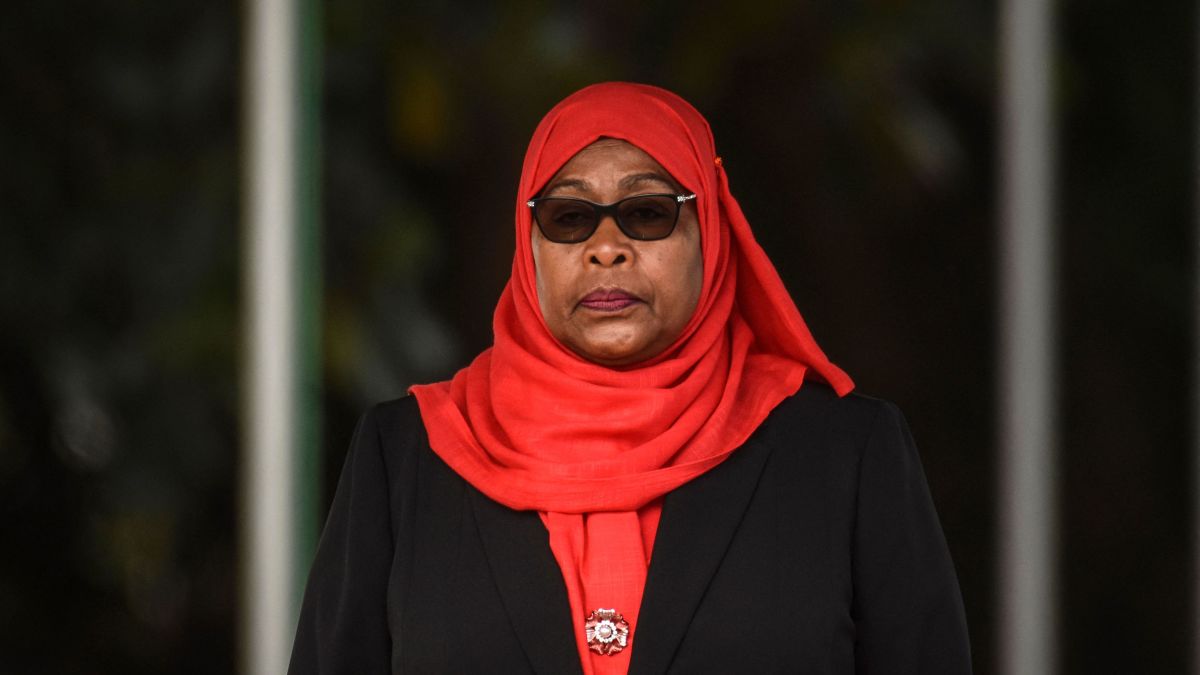
During her inauguration ceremony, President Samia acknowledged the “loss of lives and destruction of public property”, but added that it was “not surprising” that some of those arrested were foreign nationals.

Samia first came into office in 2021 as Tanzania’s first female president following the death of President John Magufuli.

She was initially praised for easing political repression under her predecessor, but the political space has since narrowed.

Kiir pays tribute to Bona Malwal as “brother and elder Statesman”

President Salva Kiir has described the late veteran politician Bona Malual Madut Ring as “my beloved brother and elder statesman” in a condolence message following his death on Sunday in Juba at the age of 97.

In a statement dated November 3, President Kiir said he learned of Bona Malwal’s passing with profound sadness.

He extended his condolences to the late leader’s family and the Twic Mayardit community, where Bona hailed from.

“It is with profound sadness that I learned of the passing of my beloved brother and elder statesman, Bona Malwal Madut Ring,” President Kiir said.

“On behalf of the people and government of the Republic of South Sudan and my own family, I offer my sincere condolences to family, friends, the Twic Mayardit community, and South Sudan at large,” end quote.

Other top officials, including former Transport Minister Dr. Lam Akol Ajawin, Senior Presidential Advisor Kuol Manyang Juuk, and Senior Presidential Envoy for Special Programs Adut Salva Kiir, have also paid glowing tributes to the veteran leader.

Bona Malual was a prominent politician, journalist, and author, known for his decades-long contribution to the struggle for South Sudan’s independence.

He published several books and founded journals and magazines that amplified the voices of South Sudanese during the liberation movement.

Malual previously served as Minister of Culture and Information under the government of Gaafar Nimeiri, as Regional Minister in the former Southern Sudan Autonomous Region, and later as Advisor to the Presidency of Sudan.

President Kiir praised Bona Malwal as “a leader and visionary who sacrificed for the people of South Sudan,” adding that “he will be dearly missed.” Continue reading “Kiir pays tribute to Bona Malwal as “brother and elder Statesman””

7.5 million S. Sudanese to go hungry; 2 million children at risk – latest IPC Report

The United Nations has sounded the alarm over a worsening food and nutrition crisis in South Sudan — with millions facing hunger and more than two million children at risk of acute malnutrition during the 2026 lean season, unless urgent action is taken. Continue reading “7.5 million S. Sudanese to go hungry; 2 million children at risk – latest IPC Report”

Juba-based Kakwa leader appeals for search, release of missing member, Khamis Samuel

The chairperson of the Kakwa community in Juba, Dada Lemi, has added his voice to calls for the safe release of Mr. Khamis Samuel Justin, also known as Kaka Samuel, who was reportedly kidnapped in the capital last week.

In a statement issued on Monday, Mr. Lemi said the community is deeply concerned about the disappearance of Mr. Khamis, a resident of Hai Munuki (Mia Saba), who went missing on October 30, 2025, after leaving home to withdraw money from the bank.

“It is with deep pain that the Kakwa people and its leadership announce the missing of their son, Mr. Khamis Samuel Justin,” the statement reads.

“He went missing on October 30 in the afternoon when he left for the bank to withdraw some money. Around 2:00–3:00 p.m., he sent an emergency message to his younger brother through a workmate, saying he was being kidnapped by unknown persons and taken to an unknown location. His phone went off immediately after.”

According to Mr. Lemi, the community and family members have checked all police stations around Juba but have not been able to trace Khamis’s whereabouts. The matter has been officially reported to the police.

“We are very much worried for his safety,” Lemi said. “The community leadership is in close engagement with local authorities and other security agencies in this search.”

He appealed to those responsible for the abduction to release Khamis unharmed, urging that any grievances should be addressed through lawful channels.

“I call on the abductor or abductors to kindly release Mr. Khamis. He has a family and relatives who are deeply worried and in pain. If there is any issue, please handle it through formal and legal procedures as the legitimate way to solve matters peacefully and amicably,” he stated.

Mr. Lemi also urged the public to assist in locating the missing man by sharing any information that could help security agencies trace him.

“I appeal to the public to support the family, the Kakwa community, and the authorities in this search by providing information in case you saw or see Khamis,” he said.

To the family and members of the Kakwa community, the chairperson offered words of comfort, calling for calm and unity during the search efforts.

“I urge you to stay calm, pray, and keep hope alive that Khamis is in good condition wherever he is kept. I believe he shall be found or released soon,” Lemi added.

The Kakwa community leadership said it is engaging both state and national authorities and hopes to receive updates on the ongoing search. Continue reading “Juba-based Kakwa leader appeals for search, release of missing member, Khamis Samuel”

Support Eye Radio, the first independent radio broadcaster of news, information & entertainment in South Sudan.

Make a monthly or a one off contribution.