9th June 2026

Minister Barnaba Bak calls for revenue boost, spending cuts to stabilize economy

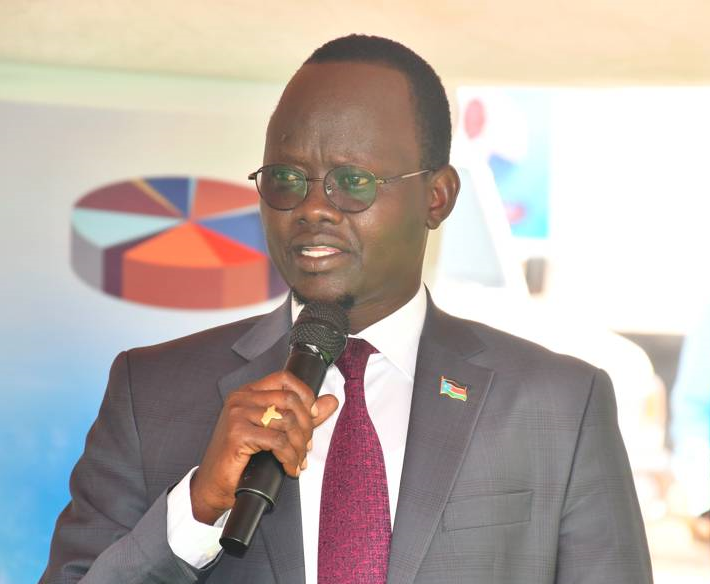
The newly appointed Minister of Finance and Economic Planning, Dr. Barnaba Bak Chol, has stressed the need to increase revenue collection and reduce government expenditure to help stabilize South Sudan’s struggling economy.

Speaking during his welcoming ceremony at the Ministry of Finance and Planning in Juba on Thursday morning, Dr. Bak stressed the need for policies that diversify the economy. He said that given the country’s current situation, austerity measures—policies that encourage more revenue collection while limiting spending—must be implemented.

He linked the approach to a “state of emergency” requiring strict discipline to rectify the situation.

“Let’s accept change in our lives, even if it is affecting your position, because the country is bigger than you,” Dr. Bak said.

“This time, we must focus on increasing collection and reducing spending. Literally, we are supposed to go for austerity measures. Austerity programs are a set of economic policies that encourage more collections, but less spending.”

He added: “It is just like a state of emergency in a security setup. When things go tough, you also tighten your tools and your policies to rectify the situation. This situation will continue a little bit tough for the next few months before we rectify these problems and change the status quo.”

Dr. Bak warned that “there is no miracle, and there is nothing much that a minister can do in a very short while to change the situation. Unless you change your spending attitudes. I want you to spend wisely.”

The minister also outlined priorities for economic transformation, including enhancing oil production, realigning tax collection, stopping unnecessary payments and contracts, and developing sectors such as agriculture and mining.

“When we say let’s enhance our oil production and let’s realign our tax collection, and let’s stop the random payments and contracts, and let’s go for agricultural mining, it becomes a complete mission of economic transformation,” he said.

“This mission requires not only patience to be implemented but also faith and hard work to be achieved,” he added.

“Let’s communicate intellectually, seek clarification over confusion, cooperation over manipulation, and correlation over division, and also seek correction over corruption.”

Dr. Bak’s message highlights the government’s focus on fiscal discipline, economic reform, and citizen participation as critical steps toward stabilizing South Sudan’s economy.

Norway envoy warns of breakdown in 2018 peace deal, cites rising conflict

Norway’s Special Envoy to the Horn of Africa, Endre Stiansen, has warned of a breakdown in South Sudan’s Revitalized Peace Agreement (R-ARCSS) following his  visit to the country last week.

During his visit from 27-29 October, Stiansen met with government officials, civil society representatives, church leaders, the United Nations, and diplomatic partners to discuss the worsening situation.

The envoy expressed deep concern over widespread fighting, aerial bombardments, and a lack of dialogue, which risk pushing South Sudan back into the violence experienced in 2013 and 2016.

According to him, the principles of power sharing are not being upheld, with one party unable to fully participate in the Transitional Government of National Unity, threatening the country’s stability and the wellbeing of its civilians.

Stiansen also raised serious concerns about the management of public revenues, including a lack of transparency around oil income and an absence of a harmonized exchange rate.

These conditions, he said, enable misuse of public funds and divert resources away from essential public services, fueling corruption, conflict, and exploitation of humanitarian aid.

“It is time to turn the page,” the envoy urged, calling on South Sudanese leaders to reject violence as a political tool and work constructively with regional and international partners committed to the country’s peace and development.

Norway reaffirmed its support for South Sudan, adding that while the path to peace and stability remains open, it requires leadership, courage, and genuine commitment from all involved. Continue reading “Norway envoy warns of breakdown in 2018 peace deal, cites rising conflict”

South Sudan, UNMISS discuss downsizing plan

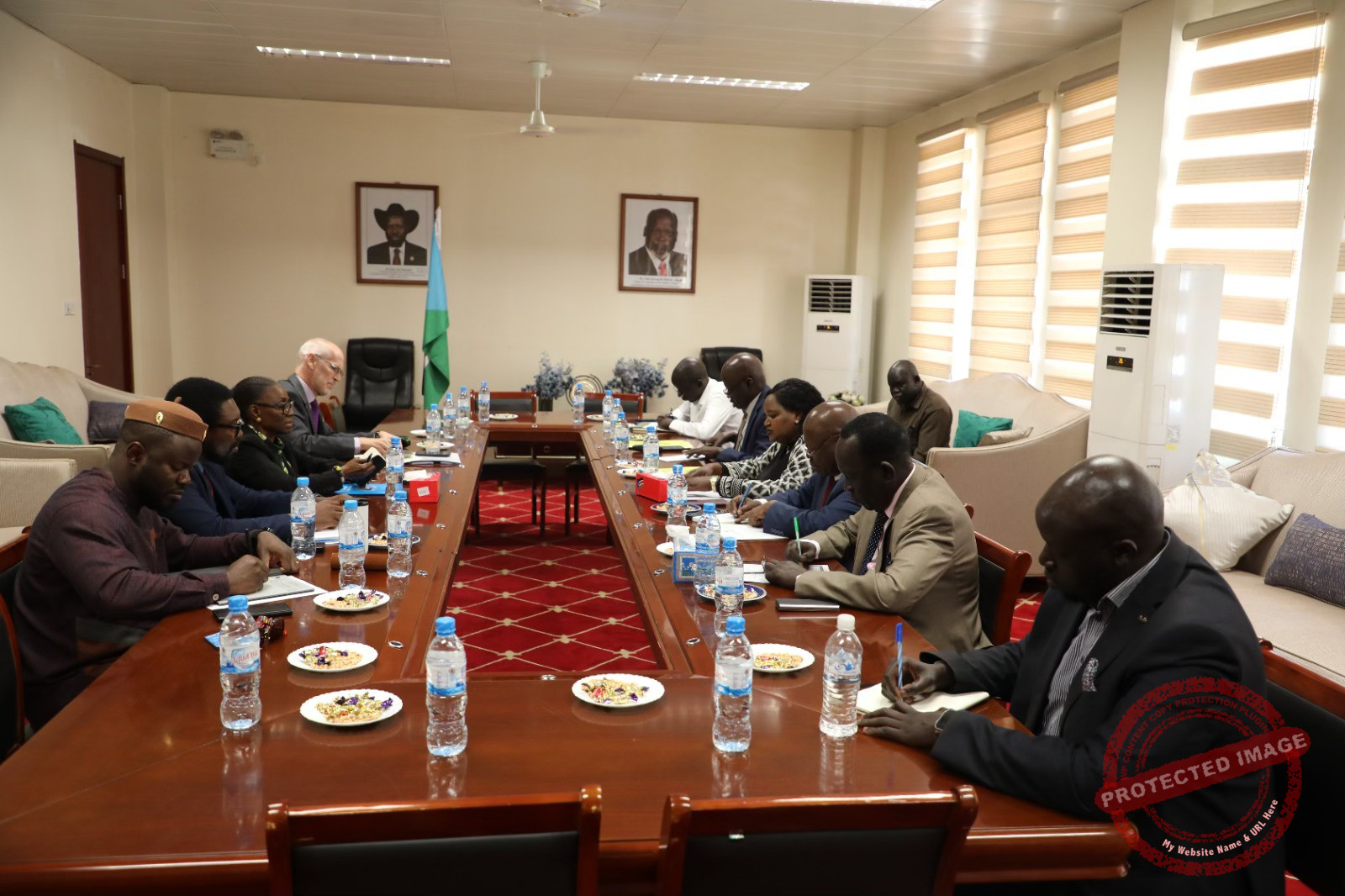
South Sudan’s Under‑Secretary for Foreign Affairs, Ambassador Agnes Adlino Orifa Oswaha, had UNMISS officials to discuss the mission’s planned downsizing and closure of field offices in Northern Bahr el Ghazal and Eastern Equatoria.

The meeting on Wednesday included Anita Kiki Gbeho, Acting UN Special Representative, the Deputy Special Representative, and the Resident Humanitarian Coordinator.

Officials reviewed how the UN’s contingency plan will affect operations and coordination with state authorities.

The UNMISS plan, announced earlier this year, includes closing the Aweil office in Northern Bahr el Ghazal and the Torit office in Eastern Equatoria due to budget constraints.

The mission emphasized that the withdrawal is aimed at streamlining operations, not ending its presence in South Sudan.

Ambassador Oswaha stressed the importance of maintaining UN support for civilian protection, humanitarian access, and the peace process, while a technical working group will now map the coordination of remaining UNMISS activities in affected areas.

Malakal transit center struggles amid funding shortfalls for returnees, refugees

Severe reductions in humanitarian funding have forced most aid organizations to withdraw from the Bulukat Transit Center in Malakal, leaving only one health partner operating at the site, according to an official.

Juma Arubol, Chairman of the Bulukat Transit Center Taskforce, said the funding shortfall has disrupted essential services and worsened conditions for thousands of refugees and returnees passing through the center.

“Bulukat Transit Center was established in mid-2023 by the government of Upper Nile State in collaboration with UNHCR and IOM,” Arubol explained.

“The purpose of the center is to provide life-saving assistance to refugees and returnees displaced by the Sudan crisis during the transit from Renk to Malakal until they reach their final destination. People stay here for up to seven days to receive shelter, food, water, health care, protection services, and support for vulnerable groups, including children and survivors of gender-based violence.”

Since its establishment, the center has assisted more than 223,000 people, including over 11,000 refugees. UNHCR has also built 12 permanent shelters accommodating up to 144 households, shared between returnees and refugees.

However, Arubol warned that the withdrawal of aid agencies due to funding cuts has created significant service gaps. “Most NGOs operating here left Bulukat because of funding cuts,” he said.

“Now only the International Medical Corps remains, providing health services with limited staff and no night or weekend coverage. This makes emergency response increasingly difficult, especially for children and other vulnerable groups arriving from Renk.”

Arubol added that about 220 individuals destined for the Sobat and Panga corridors remain stranded at the center due to insecurity along the routes.

“Transportation to the Sobat Corridor, including areas like Nasir and Ulang, has been suspended because of insecurity. These people are currently with us, waiting for safe passage,” he said.

He appealed for renewed donor support to sustain operations at Bulukat and ensure the continued delivery of humanitarian assistance.

“We need urgent assistance to maintain essential services and help people rebuild their lives with dignity,” Arubol said. Continue reading “Malakal transit center struggles amid funding shortfalls for returnees, refugees”

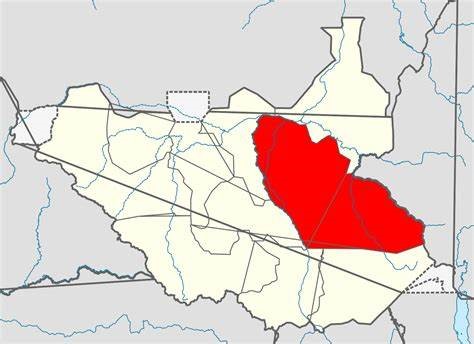
Jonglei, Pibor authorities offer contrasting accounts of cattle incident

Authorities in Jonglei State say they have recovered more than 120 cattle allegedly stolen by youths from the Pibor Administrative Area, but officials in Pibor have denied any involvement in the incident.

The Bor County Commissioner, Samuel Ateny Pech, said the cattle were stolen two days ago from Makauch Payam within Bor Town. He said the recovery took place around 1 PM yesterday, noting that one of the animals had been killed by the thieves.

“Two days ago, individuals from Pibor Administrative Area stole cattle in Makauch Payam within Bor town, Tibet area. This was not a raid, as no gunfire exchange occurred; it was a theft. A total of 121 cattle was stolen, but we recovered 120 of them yesterday around 1 PM.

The thieves killed one cattle and ate it. I have not communicated with the authorities in Pibor Administrative Area since there were no casualties and we successfully recovered our cattle,” Ateny said.

However, Greater Pibor Administrative Area Information Minister, Jacob Werchum, dismissed the claims, calling them unverified and unsupported by evidence.

“We have not received any contact from the Jonglei government to confirm this information. We consider this to be a makeup story and not an official report.

‘There are no ongoing conflicts involving youth from either side, and no one has been wounded. The incident is said to have occurred within Bor town, but it is unlikely that youth from Greater Pibor would raid cattle in the state capital. These stories appear to be untrue,” Werchum said. Continue reading “Jonglei, Pibor authorities offer contrasting accounts of cattle incident”

Yakani urges swift implementation of electoral timelines ahead of 2026 polls

Activist Edmond Yakani has urged the need for timely action to meet key electoral deadlines set out in the National Elections Act (2023, amended).

South Sudan is scheduled to hold national elections on 22nd December 2026. Under Section 41(1e) of the Act, the Government of National Unity is required to review and rename geographical constituencies by 22nd December 2025.

If this deadline is not met, Section 41(1f) stipulates that the constituencies used in the April 2010 elections will automatically apply.

Yakani who is the Executive Director of the Community Empowerment for Progress Organization said the remaining time to complete the constituency review is limited, warning that “the likelihood of defaulting to Section 41(1f) is very high if political leaders do not act promptly.”

He explained that delaying both provisions could disconnect the elections from constitutional and population processes, saying “the application of Section 41(1f) from 22nd December 2025 would delink elections from constitutional making and population considerations.”

Yakani Warned that failure to implement either Section 41(1e) or Section 41(1f) before 22nd September 2026 may complicate preparations for the polls.

He said this could leave the government with limited options, including forming an interim administration or extending the current transitional period.

He called on the Government of National Unity to make key political and technical decisions before 22nd December 2025, address electoral issues raised by the United Nations, African Union, and IGAD, as well as technical matters flagged by the National Elections Commission.

Yakani also cautioned that “any attempt to extend the transitional period or postpone the 2026 elections could trigger legal action at the East African Court of Justice,” citing precedents from similar cases in the region.

He stressed that holding the elections as planned is crucial, saying “the path to peace lies in conducting elections as scheduled on 22nd December 2026.”

The CEPO Executive Director added that the organization is ready to facilitate strategic dialogues among signatories to the Revitalized Peace Agreement, aimed at creating an enabling environment for inclusive political discussions.

Yakani said citizens’ demand for elections on the legally prescribed date remains “serious and non-negotiable.”

In October, the Chairperson of the National Elections Commission, Professor Abednego Akok, proposed that the upcoming elections be conducted based on the 2008 population census and the 2010 constituencies, noting that “time is limited before the December 2026 elections.”

Professor Akok also revealed that the Commission has not yet received funding for pre-election activities, despite a presidential directive instructing the Ministry of Finance to release the money. Continue reading “Yakani urges swift implementation of electoral timelines ahead of 2026 polls”

SSRA calls on businesses to clear withholding taxes ahead of VAT rollout

The Commissioner-General of the South Sudan Revenue Authority (SSRA), Simon Akuei Deng, has called on businesses to clear any outstanding withholding taxes as the country prepares to introduce the Value Added Tax (VAT).

Speaking during a workshop organized by the SSRA in partnership with the Ministry of Finance and Planning and the World Bank on Wednesday, Akuei said South Sudan is set to implement VAT alongside the existing consumption tax.

According to him, the current sales tax that they are implementing for the 2024-2025 reports is actually 1.7% compared with other regions of the EAC that have 30 % minimum.

“South Sudan is set to roll out VAT alongside the consumption tax,” Akuei explained. “Together with VAT, we are introducing an electronic receiving and invoicing system to digitize transactions, improve accountability, and minimize human interference in tax administration.”

He said the new system will not only enhance efficiency but also ensure transparency for donor-funded projects.

“This form will not only improve efficiency, but also provide donor projects with assurance, transparency, and easy-to-use systems for fulfilling their tax obligations,” he added.

Akuei noted that while late payments usually attract penalties, the Authority will waive all penalties for accumulated withholding taxes up to the 4th of November 2025 to give businesses time to comply.

“Normally, when you don’t pay on time, it attracts penalties,” he said. “But because of our failure to engage and sensitize you on time, from the 4th of November 2025 going backwards there will be no penalties. Whatever accumulated withholding tax you have, please remit it to the government account.”

The workshop, held at the SSRA headquarters in Juba, focused on improving tax compliance and addressing challenges related to donor-funded projects. It brought together officials from the Revenue Authority, the Ministry of Finance, development partners, and the private sector to discuss ways to enhance transparency and efficiency in tax administration.

The Undersecretary for Planning at the Ministry of Finance and Planning, Benjamin Ayali Koyongwa, reminded managers of donor-funded projects that they are not exempt from paying taxes, although certain project assets may qualify for exemptions.

“For donor-funded projects, the persons managing the projects are not exempted,” Koyongwa clarified. “But the equipment and vehicles used for project operations are exempted, as provided for within the financing agreements we sign with donors.”

He further emphasized that under the South Sudan Revenue Authority Act, 2016 (as amended), only SSRA and its designated officials are authorized to collect taxes.

“According to the law, the Revenue Authority collects funds on behalf of the government,” he said. “If anybody other than SSRA or its designated officials comes to your office requesting taxes, you should object.”

The Commissioner-General concluded by urging businesses to cooperate fully with the ongoing reforms, stressing that digitization and compliance are key to improving South Sudan’s domestic revenue mobilization.

US strips protected status for South Sudanese nationals

The Trump administration is ending the temporary protected status for South Sudanese nationals that has been in place for more than a decade, according to a U.S. Department of Homeland Security (DHS) notice published on Wednesday as reported by Reuters news agency.

Nationals from South Sudan have a 60-day grace period to leave the United States before facing deportation starting in early January, DHS said in the notice on their designation status, which expired on Monday.

Republican U.S. President Donald Trump has sought to strip legal status from hundreds of thousands of migrants from a number of countries since taking office in January as part of his broad immigration crackdown and “America First” agenda.

South Sudan’s TPS designation was most recently renewed for 18 months, from November 4, 2023, to May 3, 2025, by then-DHS Secretary Alejandro Mayorkas,

“due to ongoing armed conflict and extraordinary and temporary conditions in South Sudan that prevent individuals from safely returning.” It was then extended automatically for six months, through November 3, after DHS did not complete a required review before a statutory 60-day window passed.

The termination marks a significant shift in U.S. policy toward South Sudan, a country still struggling to recover from years of civil war and humanitarian crises.

While DHS says conditions have improved, humanitarian groups and regional experts caution that peace remains fragile, with deepening economic distress creating challenges for any safe return.

The TPS program is a humanitarian designation under U.S. law for countries stricken by war, natural disaster or other catastrophes, allowing recipients living in the United States protection from deportation and access to work permits.

South Sudan has faced repeated cycle of violent conflict since 2011, with a civil war between 2013 and 2018 leaving 400,000 people dead.

Continue reading “US strips protected status for South Sudanese nationals”

Newly appointed officials sworn in, Kiir urges service and unity

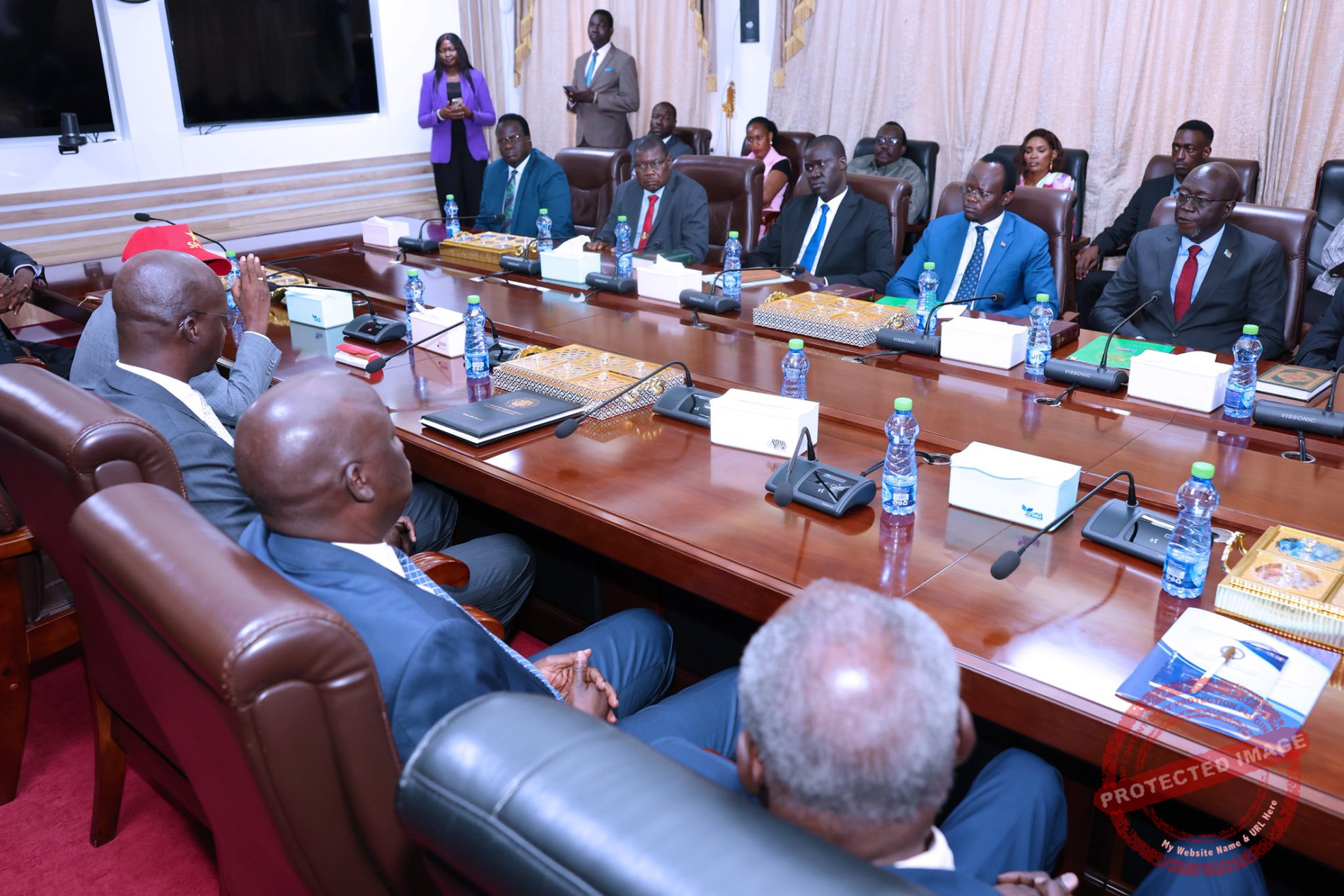
The newly appointed government officials have been sworn in before President Salva Kiir Mayardit, who urged them to focus on service delivery, peace, and national unity.

Speaking at the ceremony in Juba, President Kiir reminded the appointees to serve the interests of the nation above all else.

Those sworn in include Tut Gatluak Manime as Presidential Advisor on National Security Affairs, Africano Mande Gedima as Minister of Presidential Affairs, Dr. Barnaba Bak Chol as Minister of Finance and Planning, and Moulana Athian Akec Ong’a as Head of the Legal Department.

They were appointed through a Republican Decree on Monday, replacing their dismissed predecessors.

President Kiir also called on the officials to uphold integrity, accountability, and teamwork in carrying out their duties, saying the government remains committed to building strong institutions and addressing the country’s economic challenges.

Continue reading “Newly appointed officials sworn in, Kiir urges service and unity”

Support Eye Radio, the first independent radio broadcaster of news, information & entertainment in South Sudan.

Make a monthly or a one off contribution.