
6th May 2026
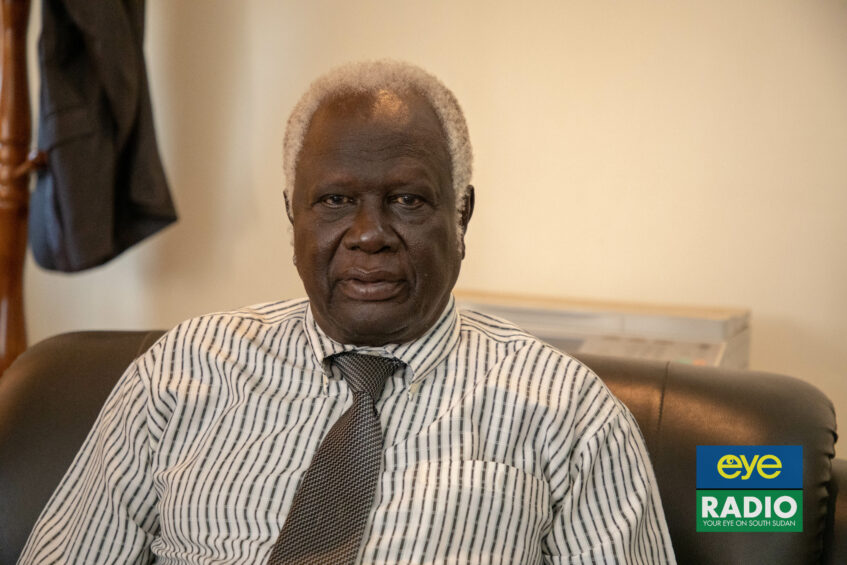
Professor Abednego Akok, the Chairperson of the National Elections Commission speaks to Eye Radio. (Photo: Awan Moses/Eye Radio).
A legal review of South Sudan’s electoral system has exposed gaps in dispute resolution structures, sparking calls for reform within the National Elections Commission (NEC) and the judiciary.
Deng John, Director of the African Centre for Legal Studies, told Eye Radio on Tuesday, May 5, that the Commission currently relies on a single advisor seconded from the Ministry of Justice.
Describing this arrangement as insufficient for a nationwide election, Deng warned that limited legal capacity could undermine the credibility of the process. He is calling for the establishment of a dedicated legal department within the commission, led by a president and vice president, to ensure efficient oversight.
“Electoral disputes arise at different stages, particularly during candidate nominations, where individuals may be accepted or rejected by the commission,” Deng explained. “At this stage, the commission is responsible for resolving complaints before matters escalate to the courts.”
He emphasized that electoral dispute resolution is highly time-sensitive, often requiring decisions within one to two weeks. He warned that the current setup is physically and procedurally inadequate for the task at hand.
“Expecting a single advisor to review appeals from ten states and three administrative regions is unrealistic and could lead to backlogs and procedural challenges,” Deng said.
The expert’s concerns align with remarks made by the European Union’s Head of Delegation to South Sudan, Pelle Enarson. During a press briefing in Juba on Monday.
Ambassador Enarson highlighted technical failures—including the lack of a robust legal department—as a reason to consider a “smart solution” in the form of a brief, technical extension of the peace agreement until March 2027.
“No nation can achieve lasting peace, stability, and progress while violence continues to undermine the safety and potential of its citizens,” Enarson stated. “The legislative process and legal reform require patience, consultation, and consensus, but must also move forward.”
Deng concluded that strengthening the commission’s administrative capacity is the only way to safeguard the integrity of the vote.
“Strengthening the commission’s legal and administrative capacity is essential for ensuring credible elections,” he noted, adding that a professionally structured department would play a critical role in managing disputes and protecting the electoral process.

Currently on air
00:00:00 - 06:00:00
 1
1Published May 3, 2026
 2
2Published May 2, 2026
 3
3Published April 29, 2026
 4
4Published 11 hours ago
 5
5Published April 29, 2026
 6
6Published May 1, 2026
 7
7Published May 4, 2026
 8
8Published May 4, 2026
Published 10 hours ago

Published 10 hours ago
Published 10 hours ago
Published 11 hours ago

Published 12 hours ago
Published 12 hours ago
Support Eye Radio, the first independent radio broadcaster of news, information & entertainment in South Sudan.
Make a monthly or a one off contribution.
Copyright 2026. All rights reserved. Eye Radio is a product of Eye Media Limited.